
Fiber Cement Siding for Home Exteriors: The Complete Guide for Massachusetts Homeowners
When choosing exterior siding for your home, finding the right balance between aesthetics, durability, and practicality is essential. Fiber cement siding is the solution that delivers on all three fronts. In Massachusetts' climate, where facades face harsh winter snow, humid summers, and salty coastal air along Cape Cod, this material demonstrates exceptional resilience and longevity.
ANPoint Exteriors has specialized in professional fiber cement siding installation for over 10 years. During this time, we've helped hundreds of homeowners protect and transform their properties—from historic cottages in Provincetown to modern residences in Plymouth. Our reputation is built on quality, transparency, and deep expertise in working with fiber cement specifically in our local climate conditions.
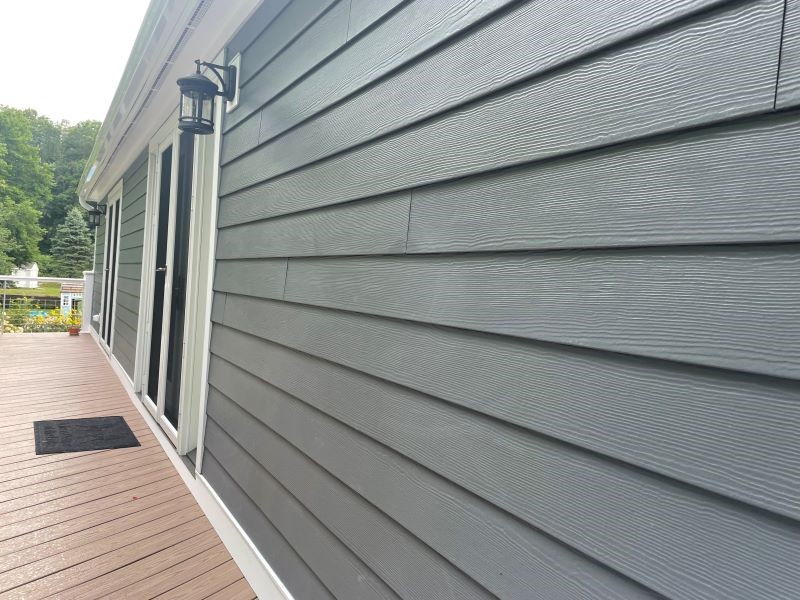
What Is Fiber Cement Siding and Why Homeowners Choose It
Fiber cement is a high-tech composite material made from Portland cement, reinforced cellulose fibers, quartz sand, and mineral fillers. The result is an exceptionally strong panel that looks virtually identical to natural wood but lasts significantly longer and requires virtually no maintenance.
Manufacturing fiber cement is a sophisticated technological process. Components are mixed, formed under high pressure, and undergo autoclave treatment (steam under pressure), which gives the material additional strength and stability. Panels are then primed or factory-painted using premium acrylic coatings.
Benefits our customers value:
- Complete resistance to moisture, rot, mold, and wood-boring insects — fiber cement doesn't absorb water, won't swell, and doesn't provide a food source for microorganisms
- Non-combustible (Class A fire rating) — the material doesn't burn, support combustion, or release toxic substances when exposed to fire, providing additional protection for your home
- UV resistance — color won't fade even after decades in the sun thanks to factory-applied coatings with UV inhibitors
- Withstands extreme temperature fluctuations — from -30°C in winter to +40°C in summer without warping, cracking, or losing performance
- Impact resistance — unlike vinyl, fiber cement won't crack from accidental impacts like baseballs or hail
- Wide variety of textures and colors — cedar, oak, pine, stucco, brick, stone; over 20 factory colors with custom color matching available
- Manufacturer warranties up to 30–50 years — with professional installation, the material lasts for generations
- Eco-friendly — contains no asbestos or toxic substances, safe for your family and the environment
If you're looking for fiber cement siding installation, it's important to understand: the material's durability is only fully realized when installation follows proper techniques. That's why the ANPoint Exteriors team pays special attention to substrate preparation, seam sealing, selecting compatible fasteners, and meeting all manufacturer technical requirements.
Real Fiber Cement Siding Cost: Transparent Pricing with No Hidden Fees
One of the first questions we get: "How much does fiber cement siding cost?" At ANPoint Exteriors, we believe in complete honesty and transparency, so we break down the budget item by item so you understand exactly what you're paying for.
What makes up the total project cost:
- Materials (panels) — Premium brands (James Hardie, Allura, Nichiha, CertainTeed) range from $8 to $15 per square foot depending on texture, profile, thickness, and finish type. Factory-painted panels cost more than primed ones but last longer without needing repainting.
- Preparation work — Removing old siding (if present), waste disposal, checking sheathing condition, repairing or replacing damaged elements, installing modern moisture and wind-resistant barriers. This step is critical to the entire system's longevity.
- Panel installation — Precise cutting to home dimensions, installation with proper expansion gaps (fiber cement expands and contracts), sealing all penetrations (windows, doors, corners, roof transitions, utilities).
- Decorative and functional elements — Outside and inside corners, window and door trim, starter and finish strips, J-channels, soffit panels for eaves, ventilation grilles, gutter systems (if needed).
- Finishing work — Painting (if primed panels are selected), sealing joints with high-quality silicone or polyurethane sealants.
- Labor — Skilled work from certified installers who know all the nuances of working with fiber cement.
On average, cost to install fiber cement siding in Massachusetts ranges from $12–$20 per square foot turnkey. For a 2,000 square foot home, this means a total budget of $24,000 to $40,000 depending on architectural complexity, chosen materials, and additional work.
This is an investment that pays off many times over: unlike vinyl (which needs replacement in 15–20 years) or wood (which needs painting every 3–5 years), fiber cement doesn't require frequent painting, repairs, or replacement. When selling your home, fiber cement siding increases property market value by 70–80% of the installation cost.
ANPoint Exteriors provides detailed estimates before work begins—no surprises during the process, no hidden add-ons. If you're comparing fiber cement siding installers near me, pay attention to those who work transparently, stand behind every phase, and are ready to explain every line item.
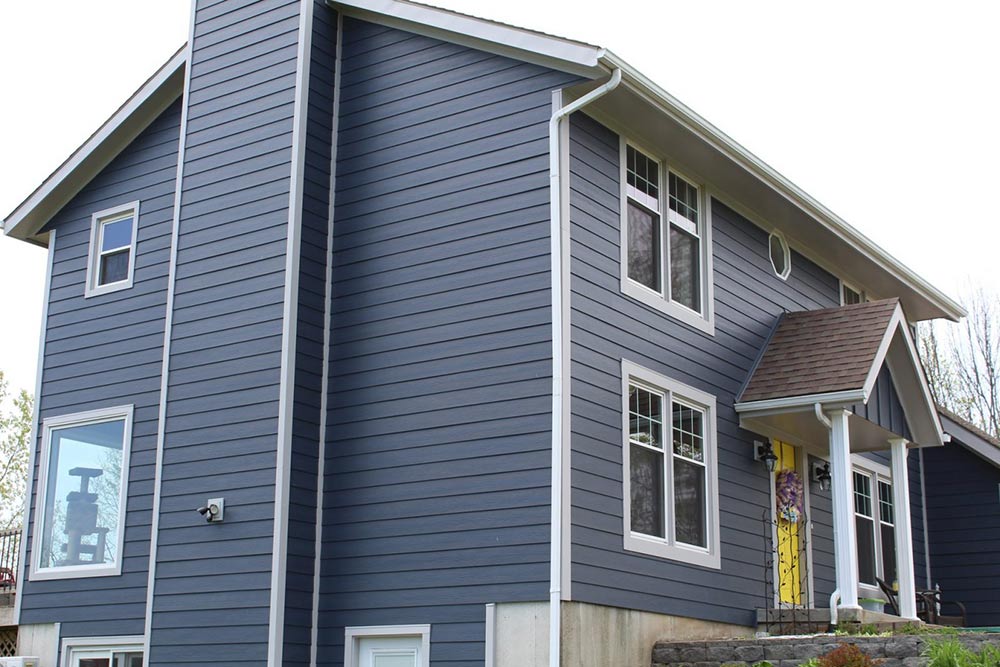
Professional Installation: Why Installation Quality Matters as Much as Material Quality
Quality fiber cement board siding installation isn't just "screwing panels to the wall." It's comprehensive engineering work where every detail affects the result, durability, and appearance of your home.
Our installation approach at ANPoint Exteriors:
1. Thorough Preparation and Assessment
- Inspection of existing facade structure, evaluation of sheathing, insulation, and moisture barrier condition
- Identifying hidden problems: rot, mold, insect damage, inadequate ventilation
- Recommendations for structural reinforcement if needed
- Precise measurements to the millimeter accounting for all architectural elements
2. Using Professional Tools
- Specialized saws with diamond blades and dust collection systems for cutting fiber cement
- Pneumatic nail guns for precise and fast fastener installation
- Laser levels for perfect row alignment
- Routers for clean cuts around windows, doors, and pipes
3. Installation Accounting for Regional Climate Features
- Creating expansion gaps (3–5mm) between panels to compensate for thermal movement
- Establishing ventilated gaps between wall and siding for moisture drainage
- Installing quality moisture and wind-resistant barriers
- Using stainless steel or hot-dipped galvanized fasteners compatible with fiber cement (regular nails can cause corrosion and staining)
- Careful sealing of all penetrations: windows, doors, corners, roof transitions, chimneys, ventilation outlets
4. Quality Control at Every Stage
- Checking horizontal alignment of each row
- Monitoring fastener depth (too deep—panel cracks; too shallow—protrudes)
- Verifying panel fit tightness
- Final inspection of entire surface
5. Respect for Your Property
- Protecting landscaping, walkways, and plants
- Regular construction debris cleanup
- Final site cleanup after work completion
- Removal of all waste materials
When you choose fiber cement siding contractors near me, you get not just contractors, but partners invested in long-term results. The ANPoint Exteriors team is certified by fiber cement manufacturers (James Hardie Elite Preferred Contractor, Allura Certified Installer) and regularly trains on new installation technologies and materials.
Design Options: Create Your Dream Facade with ANPoint Exteriors
Fiber cement isn't just one type of panel—it's a full palette of solutions for any architecture and style. We help select not only the panel type but also color schemes, considering your home's architecture, surroundings, neighboring property styles, and your personal preferences.
Horizontal Siding (Lap Siding / Clapboard)
Classic solution mimicking wood clapboard with overlapping. Panels run horizontally, each successive one overlapping the previous by 2–3 cm, creating characteristic relief and ensuring excellent water drainage.
Ideal for:
- Colonial-style homes
- Victorian architecture
- Farmhouse styles
- Cape Cod cottages
If you're considering fiber cement shingle siding installation for main wall areas, this option delivers a clean, neat appearance with traditional aesthetics. Various panel widths are available (6 to 12 inches), allowing different visual rhythms.
Shingles & Shakes
Textured panels with dimensional relief mimicking split or sawn cedar. Shingles have a smoother, sawn surface, while shakes feature rougher, split texture with pronounced wood grain.
Application features:
- Often used on gables, dormers, and accent areas
- Creates character and facade depth
- Adds visual interest and dimension
- Pairs excellently with horizontal siding
fiber cement shake siding installation is especially popular on Cape Cod, where this style is historically rooted in local architecture. Various shapes are available: rectangular, hexagonal, half-round, and diamond.
Vertical Panels (Board & Batten)
Modern rhythmic pattern where wide vertical panels (board) alternate with narrow strips (batten) covering the joints.
Advantages:
- Visually "elongates" the facade, adds height
- Creates dynamics and modern appeal
- Perfect for modern, ranch, barn, and Scandinavian styles
- Can be used as accent on individual elements (garage, porch) or entire home
Panels Mimicking Stucco and Stone
Smooth or textured surface imitating stucco, brickwork, or natural stone.
Applications:
- Mediterranean style
- Spanish architecture
- Contemporary minimalism
- Achieves stone appearance without the weight and cost of natural material
- No need for reinforced foundation structure
Combined Solutions
We often recommend combining different fiber cement types to create unique looks:
- Horizontal siding on main walls + shingles on gables
- Vertical panels on first floor + horizontal on second
- Fiber cement + natural wood for accent areas
- Fiber cement + vinyl siding for budget optimization
Our designers can create 3D visualizations of your home with different material and color options so you can see the result before work begins.
Why Massachusetts Homeowners Trust ANPoint Exteriors
We're not just "another company." We're a local team with deep expertise in working with fiber cement specifically in our local climate conditions, with understanding of regional architecture and style.
What sets ANPoint Exteriors apart:
✅ Certification from leading manufacturers — we're officially recognized installers for James Hardie (Elite Preferred Contractor), Allura (Certified Installer), and Nichiha. This means we've passed rigorous selection, training, and meet the highest quality standards.
✅ Local experience and knowledge — we know how materials perform in Cape Cod's coastal climate with salt air and in the mainland's continental conditions with sharp temperature swings. We understand Massachusetts building code requirements.
✅ Full-service approach — from measurement and design to installation and post-warranty service. You don't need to find separate contractors for demolition, installation, and painting—we handle everything turnkey.
✅ Transparency and honesty — fixed estimates that don't change during the process, clear timelines, regular communication, photo updates at each stage. No hidden fees or unexpected add-ons.
✅ Workmanship warranty — up to 10 years on installation in addition to manufacturer material warranties (30–50 years). We stand behind our work quality and are ready to guarantee it.
✅ Financing and flexible payment options — we help with financing arrangements, offer convenient payment plans, and work with insurance companies for siding replacement after natural disasters.
✅ Reviews that speak for themselves — hundreds of satisfied customers throughout Massachusetts, 5-star ratings on Google and other platforms, referrals from past clients.
✅ On-time completion — we value your time, start and finish work on agreed schedules without delays.
When you're looking for fiber cement siding installation expert, you deserve a team that knows the material, the region, and your expectations. ANPoint Exteriors is exactly that team.
Our Service Area: We're Near You
ANPoint Exteriors is proud to serve homeowners throughout Massachusetts. Our team is mobile, fully equipped, and ready to work in any of the following areas:
Upper Cape:
Barnstable, Falmouth, Mashpee, Sandwich
Mid Cape:
Barnstable, Centerville, Cotuit, Dennis, Hyannis, Marstons Mills, Osterville, West Barnstable, Yarmouth
Lower Cape:
Brewster, Chatham, Harwich, Orleans
Outer Cape:
Eastham, Provincetown, Truro, Wellfleet
South Shore (MA):
Cohasset, Duxbury, Hingham, Kingston, Marshfield, Pembroke, Plymouth, Scituate
Whether you're looking for fiber cement siding company near me in Hyannis, cement siding installers near me in Plymouth, or specialists in Falmouth—we'll come out, assess your property, and offer the optimal solution. We know every town, every feature of the local climate and architecture.
Detailed Installation Process: What to Expect from Start to Finish
We value your time and comfort, so we organize work as smoothly, predictably, and professionally as possible. Here's what working with ANPoint Exteriors looks like:
Stage 1: Free On-Site Visit and Consultation (1–2 days)
- Our specialist comes to your home at a convenient time
- Inspects current facade condition, takes measurements
- Discusses your preferences, style and color choices
- Answers all questions about materials, process, and timelines
- Takes photos for estimate preparation
Stage 2: Detailed Estimate Preparation (2–3 days)
- Calculate exact material quantities
- Select several panel options for your budget
- Prepare detailed estimate broken down by cost categories
- Offer 3D visualization (optional)
- Send documents for review
Stage 3: Agreement and Contract Signing (1–2 days)
- Discuss details, make adjustments if needed
- Select specific material, color, and profile
- Set start and completion dates
- Sign contract with fixed price and timeline
- Discuss payment terms
Stage 4: Material Ordering and Preparation (1–2 weeks)
- Purchase materials from manufacturers
- Check quality and completeness
- Prepare tools and equipment
- Confirm exact work start date
Stage 5: Professional Installation (1–3 weeks)
Days 1–2: Preparation
- Material delivery to site
- Installing protective coverings on landscaping and walkways
- Old siding removal (if present)
- Waste disposal
- Sheathing inspection and repair
- Moisture and wind barrier installation
Days 3–10: Panel Installation
- Starter strip installation
- Panel installation row by row with horizontal alignment checks
- Cutting openings for windows, doors, and pipes
- Installing corner pieces and trim
- Sealing all penetrations
- Soffit and finish trim installation
Final Day: Completion
- Final quality inspection
- Addressing minor issues (if any)
- Complete site cleanup
- Removing all construction debris
- Siding care instructions
- Acceptance signing
- Warranty document handover
Stage 6: Post-Sale Service
- Follow-up satisfaction check one week after completion
- Maintenance and care consultations
- Up to 10-year workmanship warranty
- Prompt response to any questions
The entire process takes 2 to 4 weeks depending on property size and complexity. You get a refreshed facade without stress, surprises, or disruption to your comfort.
Easy Maintenance — Long-Term Savings with Fiber Cement
One of the main advantages of fiber cement siding is minimal maintenance requirements. But "minimal" doesn't mean "none." Proper care extends the material's life and preserves its appearance for decades.
Maintenance recommendations from ANPoint Exteriors:
🔹 Annual visual inspection (spring after winter)
- Check panels for mechanical damage after snow and winds
- Inspect sealant around windows, doors, and corners
- Check paint condition (if there are peeling areas)
🔹 Washing every 1–2 years
- Use garden hose with nozzle or low-pressure washer (up to 1,500 PSI)
- Wash from top to bottom to avoid streaks
- For stubborn dirt, use soft brush with water and mild detergent solution
- On the coast, rinse facade more often after storms (removes salt deposits)
🔹 Repainting when needed
- Factory coating lasts 10–15 years without color loss
- When repainting is needed, use 100% acrylic latex premium paints
- Prepare surface: clean, sand if needed, prime
- Paint in dry weather at temperatures from +10°C to +30°C
🔹 Sealant monitoring
- Every 3–5 years, check sealant condition around windows, doors, and corners
- If cracks or peeling appear, remove old sealant and apply new
- Use quality silicone or polyurethane sealants
🔹 Organic growth removal
- Moss or algae may appear in shady areas
- Use solution: 1 part bleach to 3 parts water
- Apply, let sit for 10 minutes, rinse with water
- Don't use metal brushes—they can damage the coating
What to avoid:
❌ Don't use abrasive brushes, steel wool, or harsh chemicals (solvents, acids)
❌ Don't aim pressure washer stream at 90° angle to panel seams—water can penetrate under siding
❌ Don't use pressure washers above 1,500 PSI—this can damage the coating
❌ Don't ignore small chips and cracks—timely repair prevents moisture penetration
❌ Don't paint in excessively hot or cold weather—this affects paint adhesion
If you have questions about maintenance, the ANPoint Exteriors team is always available. fiber cement siding installation services from our company include post-sale support and consultations throughout the siding's service life.
Coastal Area Specifics: Protection from Salt Air and Storms
For homes on Cape Cod and Massachusetts' South Shore, fiber cement is an especially smart and practical choice. The material is inert to corrosion, doesn't absorb moisture, and won't deteriorate from salt exposure, making it ideal for coastal conditions.
Why fiber cement is ideal for the coast:
- Doesn't corrode from salt air (unlike metal components)
- Doesn't absorb moisture, preventing swelling and rot
- Withstands strong winds and storm loads
- UV-resistant, which is more intense near water
- Doesn't require frequent painting despite harsh environment
Additional recommendations for coastal homes from ANPoint Exteriors:
- Choose factory-painted premium panels — this coating is more durable, uniform, and long-lasting than on-site painting. It's applied in controlled factory conditions and undergoes heat treatment.
- Use stainless steel fasteners — for maximum corrosion protection in salt air conditions. Standard galvanized fasteners can corrode in 10–15 years; stainless steel lasts for decades.
- Rinse facade with fresh water more often — especially after storms and strong winds that bring salt. Simple hose rinsing every 3–6 months removes salt deposits and prevents buildup.
- Check penetration sealing after strong winds — storms can compromise airtightness. Inspect windows, doors, corners, and pipe penetrations.
- Pay attention to metal components — gutters, flashings, and drip edges should also be corrosion-resistant materials (aluminum, copper, stainless steel).
If you're looking for fiber cement siding companies near me in a coastal area, make sure the contractor understands marine climate specifics. ANPoint Exteriors does, and we account for this in every Cape Cod and South Shore project.
Frequently Asked Questions About Fiber Cement Siding
Q: Can fiber cement be installed over old siding?
A: In some cases—yes, but it requires careful assessment of existing sheathing condition. If old siding is flat, without rot or mold, and you can verify sheathing condition, installation over it is possible. However, ANPoint Exteriors more often recommends removing old covering to:
- Check sheathing for rot or damage
- Install modern moisture and wind barriers
- Add insulation if needed
- Ensure proper gap ventilation
Our team will conduct a free inspection and give honest recommendations based on your home's best interests.
Q: How long will fiber cement siding last?
A: With professional installation and basic maintenance—30–50 years. Many manufacturers (James Hardie, Allura, Nichiha) provide 30–50 year warranties against rot, cracking, and coating delamination. ANPoint Exteriors provides up to 10-year warranty on installation quality. Actual service life can be even longer—there are homes where fiber cement has lasted 60+ years.
Q: Can fiber cement be painted any color?
A: Yes, the material accepts premium acrylic latex paints excellently. You can choose any color from Sherwin-Williams, Benjamin Moore, or Behr palettes. We also offer factory-painted panels in a wide palette (over 20 colors)—this solution provides maximum coating durability since paint is applied in factory conditions and heat-treated. If you want a unique color, custom matching is available.
Q: Is fiber cement heavy? Does it need reinforced foundation?
A: The material is indeed heavier than vinyl (about 2–3 times), but when replacing existing siding, it doesn't require structural reinforcement since the load on the foundation is minimal. For new construction, this is accounted for during design. Standard wood-frame homes in Massachusetts handle fiber cement weight without problems.
Q: How do I choose between fiber cement, wood, and vinyl?
A: Each material has advantages, and ANPoint Exteriors works with all three to offer objective recommendations:
Fiber cement — balance of durability, aesthetics, and moderate maintenance needs. Ideal for those who want wood appearance without constant upkeep.
Wood siding (learn more here) — authentic texture, natural beauty, eco-friendliness. Requires painting every 3–5 years, moisture and insect protection. Choose if you value natural materials and are ready for maintenance.
Vinyl siding (learn more here) — budget solution, simple installation, minimal maintenance. Less durable (15–20 years), can fade, less impact-resistant. Suitable for limited budgets or temporary solutions.
We'll help choose the optimal option for your needs, budget, and long-term plans.
Q: Can fiber cement be installed in winter?
A: Yes, installation is possible down to -10°C, but there are considerations. Fiber cement becomes more brittle in cold and requires careful cutting. Sealants have temperature application limits. ANPoint Exteriors prefers working in season (April–November), but can work in winter if needed with special precautions.
Q: What if a panel gets damaged?
A: Fiber cement is strong, but can crack from severe impact. Individual panels can be replaced without removing the entire wall. ANPoint Exteriors recommends keeping several panels after installation for this situation. We keep records of your materials and can order replacements if needed.
Q: Does fiber cement affect home insurance?
A: Yes, positively! Since fiber cement is non-combustible (Class A), many insurance companies offer home insurance discounts (usually 5–15%). Check with your insurer—this is additional savings.
An Investment That Works for You for Decades
Fiber cement siding isn't just a facade update or "cosmetic repair." It's a strategic investment in your home's protection, value, and beauty.
What you get choosing fiber cement with ANPoint Exteriors:
✅ Increased property market value — according to the National Association of Realtors, fiber cement siding installation returns 70–80% of investment upon home resale. This is one of the most profitable home improvement projects.
✅ Reduced maintenance and repair costs — forget painting every 3 years like with wood. Forget cracks and panel replacement like with vinyl. Fiber cement works for you without constant investment.
✅ Home structure protection — moisture protection, fire protection, insect and rot protection. Fiber cement is the first barrier protecting your home's frame from deterioration.
✅ Aesthetics that please the eye for decades — color won't fade, texture won't lose appeal, your home looks like new after 20, 30, 40 years.
✅ Peace of mind and confidence — up to 50-year warranties, professional installation, ANPoint Exteriors support throughout the service life.
✅ Eco-friendliness — fiber cement contains no toxic substances, doesn't emit harmful fumes, safe for your family and the environment.
When you choose fiber cement siding contractors near me, you're investing not just in material. You're investing in peace of mind, quality, long-term results, and a team that will be there if you need anything.
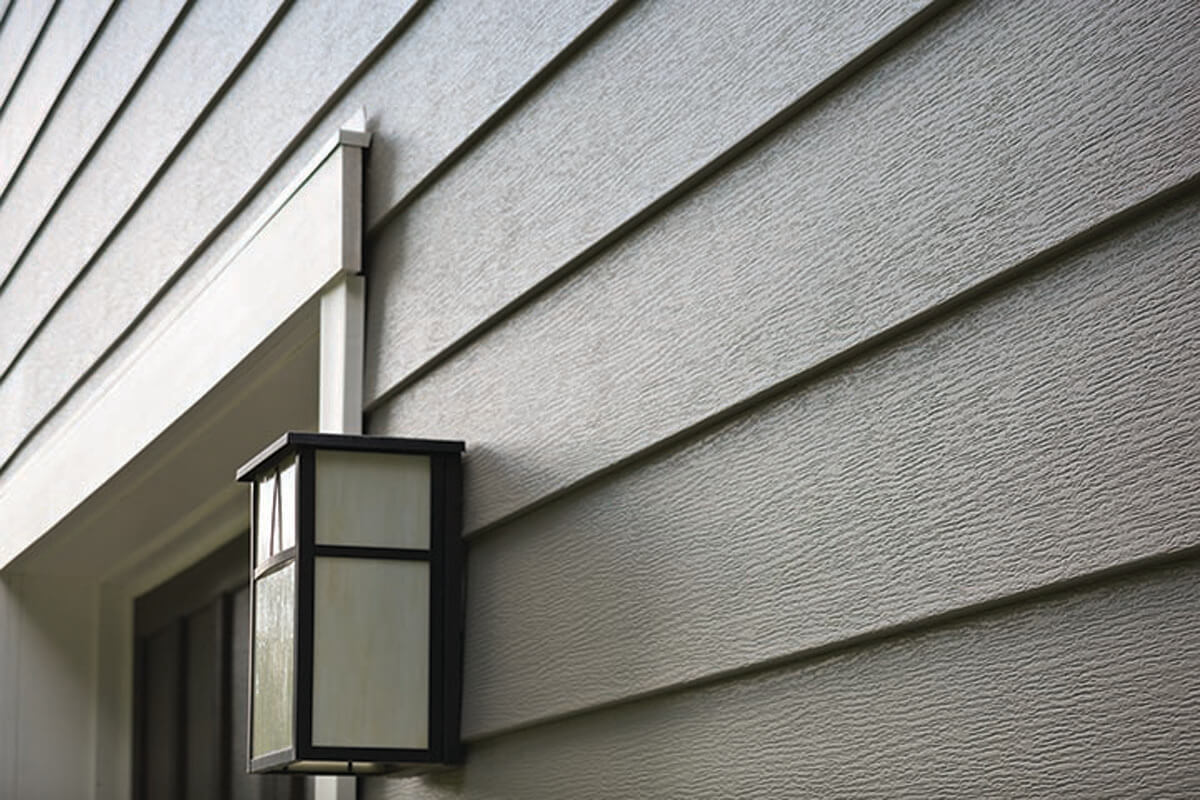
Ready to Transform Your Facade with ANPoint Exteriors?
Don't put off protecting and beautifying your home. Properly installed fiber cement siding is a solution that will work for you 30, 40, 50 years and beyond. This is an investment you—and future generations—will appreciate.
Contact ANPoint Exteriors today for a free consultation and estimate:
📞 Call directly: +1 (508) 367-2205
✉️ Or submit a request online — we'll call back within 24 hours
📧 Email us — we'll answer all questions about materials, pricing, and timelines
Why Massachusetts homeowners choose ANPoint Exteriors:
- ⭐ Over 10 years specializing specifically in fiber cement siding
- ⭐ Certified installers (James Hardie Elite Preferred, Allura Certified)
- ⭐ Up to 10-year workmanship warranty + up to 50-year manufacturer material warranty
- ⭐ Service throughout Cape Cod and Massachusetts South Shore
- ⭐ Help selecting material, texture, and color for your home's architecture
- ⭐ Transparent estimates with no hidden fees or unexpected add-ons
- ⭐ Financing and flexible payment options
- ⭐ Hundreds of satisfied customers and 5-star ratings
- ⭐ Respect for your property and on-time completion
- ⭐ Post-sale support throughout the service life
Your home deserves the best. Trust it to professionals who know fiber cement, Massachusetts climate, local architecture, and your expectations. ANPoint Exteriors is the team that will turn your home into the neighborhood's pride.
Call now and get a free consultation + detailed estimate within 48 hours!
📞 Call Now: +1 (508) 367-2205ANPoint Exteriors — protecting and beautifying your home for decades.