
Is EPDM Roofing a Good Choice for Homes on Cape Cod and the South Shore?
Choosing a roofing material for a home on Cape Cod or the South Shore involves more than appearance and cost. A roof must withstand strong winds, heavy rain, temperature fluctuations, and coastal exposure. These considerations are especially important for flat and low-slope roofs, where effective drainage plays a critical role.
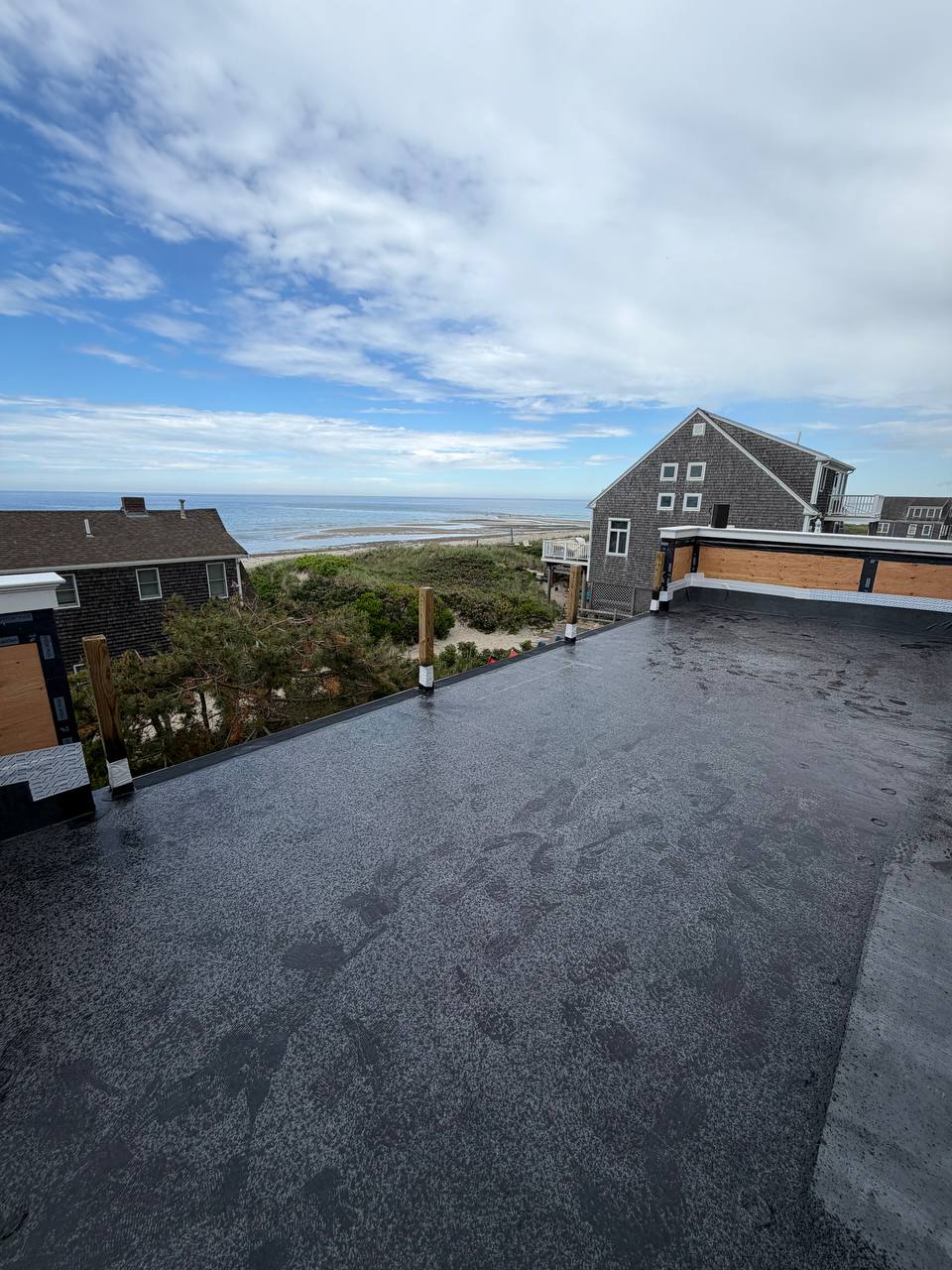
One option for these roof designs is EPDM roofing. Made from synthetic rubber, EPDM is a flexible membrane designed to provide waterproof protection for flat and low-slope roofs.
But how well does EPDM perform in coastal Massachusetts? What should homeowners consider before installation, and what factors affect the roof's long-term performance? Here are the key points to help you decide whether EPDM is right for your home.
Why Does the Climate on Cape Cod and the South Shore Matter When Choosing a Roof?
Homes in coastal Massachusetts face several environmental conditions that should be considered when selecting a roofing system.
Strong Winds and Storms
Wind places additional stress on a roof, particularly around the edges, corners, and raised sections. If the membrane, roof perimeter, or flashing is not installed correctly, these areas can become vulnerable during severe weather.
EPDM is suitable for flat and low-slope roofs, but its performance depends on more than the membrane itself. The attachment method, perimeter detailing, and installation quality all contribute to the roof's ability to withstand wind exposure.
For homes on Cape Cod and the South Shore, the roofing system should be selected and installed with the property's design and wind exposure in mind.
Rainfall and Roof Drainage
Even a flat roof needs a reliable way to drain rainwater. Persistent ponding can indicate insufficient slope, blocked or poorly positioned drains, or other design issues.
EPDM creates a waterproof barrier, but the membrane cannot correct drainage problems on its own. Before installation, the roof's substrate, drain locations, and water flow should be evaluated.
This is particularly important for homes with flat additions, garages, and other low-slope roof sections.
Temperature Changes and UV Exposure
Roofing materials are exposed to repeated heating and cooling throughout the year. As temperatures change, roof components can expand and contract.
EPDM is flexible and resistant to ultraviolet radiation. These properties help the membrane maintain its performance through normal seasonal temperature fluctuations and prolonged sun exposure.
However, the longevity of the entire roofing system also depends on properly installed seams, flashing, attachment points, and the condition of the underlying roof structure.
Salt Air and Coastal Exposure
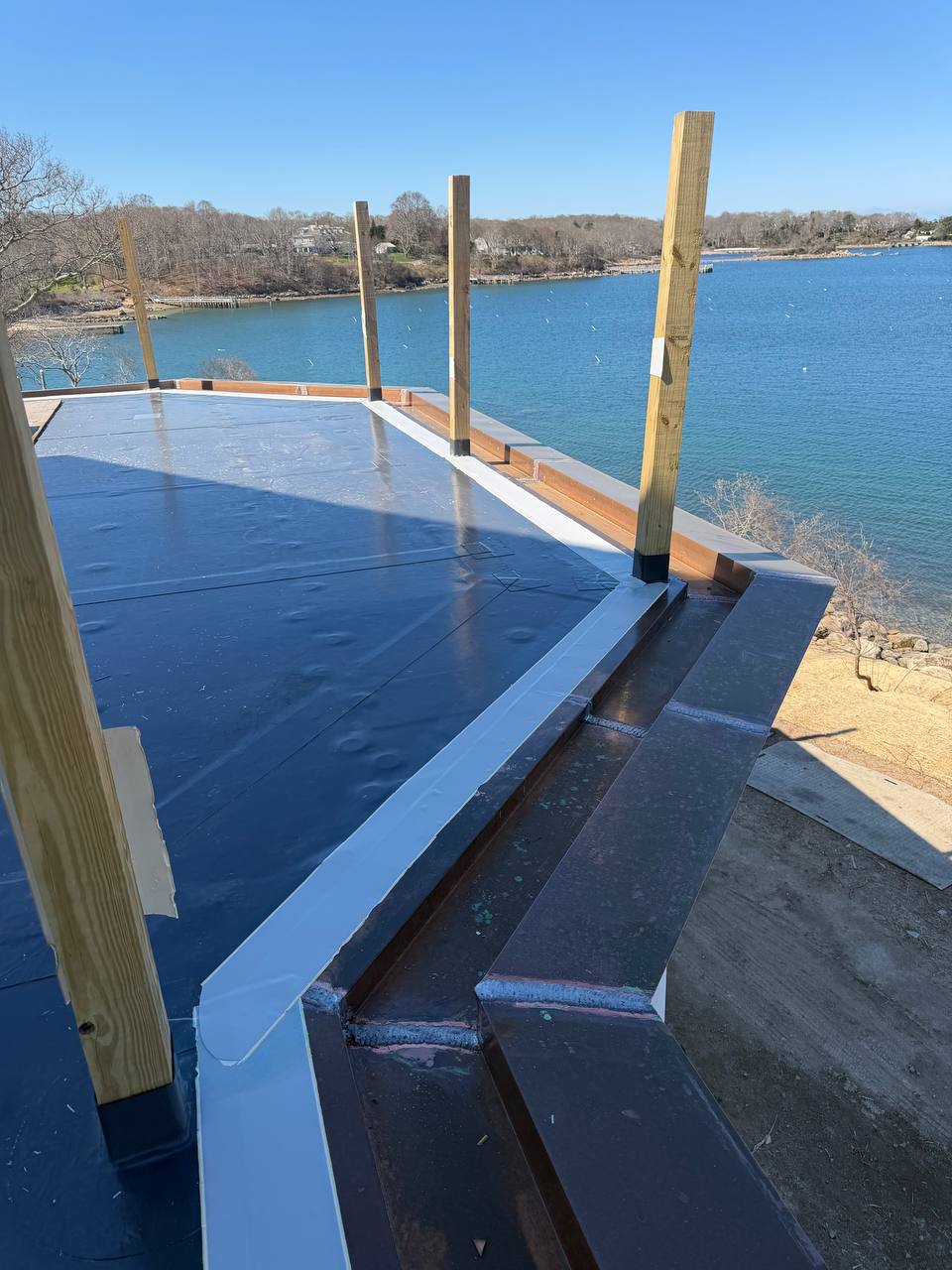
In coastal areas, salt in the air can accelerate corrosion in certain metal roofing components. When selecting a roofing system, homeowners should consider not only the membrane but also the compatibility and corrosion resistance of fasteners, metal flashing, edge details, and other components.
EPDM does not eliminate every risk associated with coastal conditions. A durable roof requires a properly selected and installed system designed for the property's environment.
What Makes EPDM Roofing a Practical Option for Cape Cod and South Shore Homes?
EPDM can be a practical choice for certain residential roof designs. Several characteristics make it worth considering for homeowners in coastal Massachusetts.
A Flexible Membrane for Flat and Low-Slope Roofs
EPDM is designed to waterproof surfaces where conventional roofing materials made of individual overlapping pieces may not be suitable.
When installed correctly, the membrane creates a continuous protective layer that helps prevent water from penetrating the roof.
It can be worth considering for flat additions, garages, porches, and other structures with a suitable roof slope.
Resistance to Weather Exposure
EPDM resists UV radiation and remains flexible across a broad temperature range. These properties are useful for roofs exposed year-round to sunlight, rainfall, and seasonal weather changes.
Still, a roof's reliability cannot be judged by the membrane's material properties alone. Proper design and installation are just as important.
The Potential for Localized Repairs
If an EPDM roof develops a small area of damage, it may be possible to repair that section without replacing the entire membrane.
The appropriate repair method depends on the type of damage, the membrane's condition, and the location of the affected area. Seams, flashing, roof penetrations, and punctures may each require a different approach.
Routine inspections can help identify these issues before they lead to more extensive water intrusion.
What Are the Limitations of EPDM in Coastal Conditions?
EPDM is not the right solution for every roof. Before choosing this material, homeowners should consider several factors.
Roof substrate condition. If the existing roof has damaged areas, moisture issues, or an uneven surface, these conditions should be assessed before installation. A new membrane will not automatically resolve problems beneath it.
Drainage. Proper slope and drain placement are essential. If water accumulates because of structural or design issues, replacing the roofing material alone will not solve the problem.
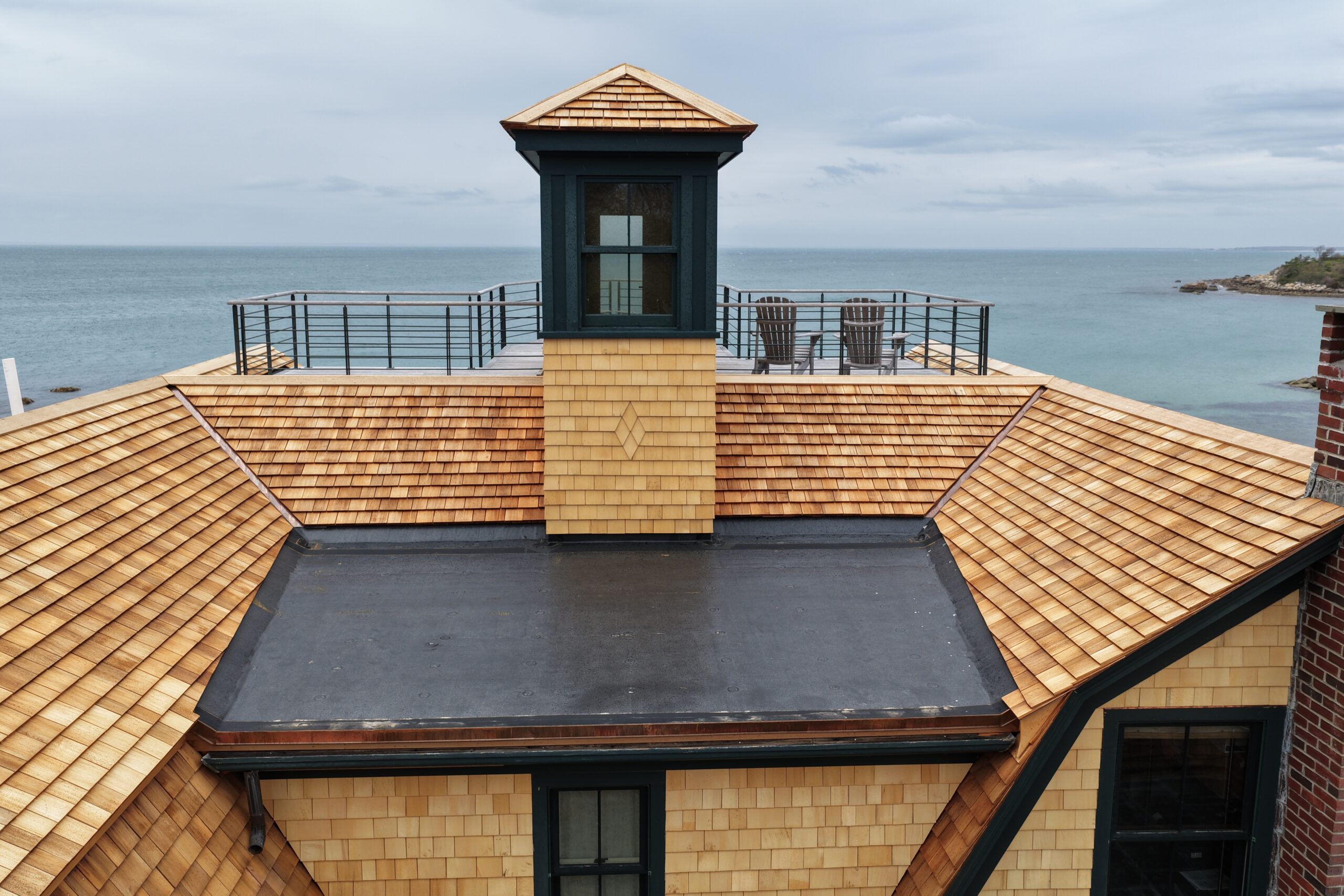
Seams and flashing. Membrane seams, roof edges, and areas around pipes or other penetrations require careful installation. These details play an important role in maintaining a watertight system.
Component selection. For coastal homes, the entire roofing assembly should be evaluated for its intended environment, including fasteners and metal components that may be exposed to salt air.
For these reasons, it is important to assess the roof as a complete system rather than choosing a material based solely on price or popularity.
How Can You Tell If EPDM Is Right for Your Home?
Before arranging EPDM rubber roofing installation, consider the following questions.
- What type of roof do you have? EPDM is primarily used on flat and low-slope roofs. The membrane and installation method must be appropriate for the roof's design.
- Does the roof drain properly? The drainage system should be suitable for the roof, without persistent water accumulation caused by design problems.
- What condition is the roof substrate in? Damaged or moisture-affected areas may require repairs or additional preparation.
- What environmental stresses does the roof face? For coastal homes, wind exposure and the appropriate membrane attachment method are particularly important.
- What work is required before installation? Some roofs may only need surface preparation, while others may require repairs or more extensive work before a new membrane can be installed.
Answering these questions helps determine whether EPDM is a suitable option and what work may be needed to achieve a reliable result.
Is EPDM the Right Choice for a Flat Roof on Cape Cod or the South Shore?
EPDM is worth considering if your home needs a waterproofing system for a flat or low-slope roof. Its flexibility, resistance to UV exposure, and potential for localized repairs make it a practical option for certain residential applications.
However, the right choice depends on the roof's design, substrate condition, drainage, and exposure to local weather conditions. Installation quality is equally important to the long-term performance of the system.
ANPoint Exteriors provides roofing services for homeowners across Cape Cod and the South Shore, Massachusetts. If you are considering EPDM roofing for a flat roof, garage, or home addition, a professional assessment can help determine whether the material is suitable for your roof and what preparation may be required before installation.
Contact ANPoint Exteriors to discuss your project and explore the right roofing solution for your home.