
Red Cedar and Copper Roof Installation in Centerville
On the waterfront in Centerville, where the salt air meets sophisticated architecture, we're undertaking one of our most complex installations yet: a multi-faceted roof system combining premium red cedar shingles with hand-formed red copper roofing, all wrapped in pristine white cedar sidewalls. This waterfront residence presents every challenge a roofing crew could ask for — multiple roof planes, varying pitches, intricate valleys, dormers, and a prominent brick chimney — and demands the highest level of craftsmanship to execute properly.
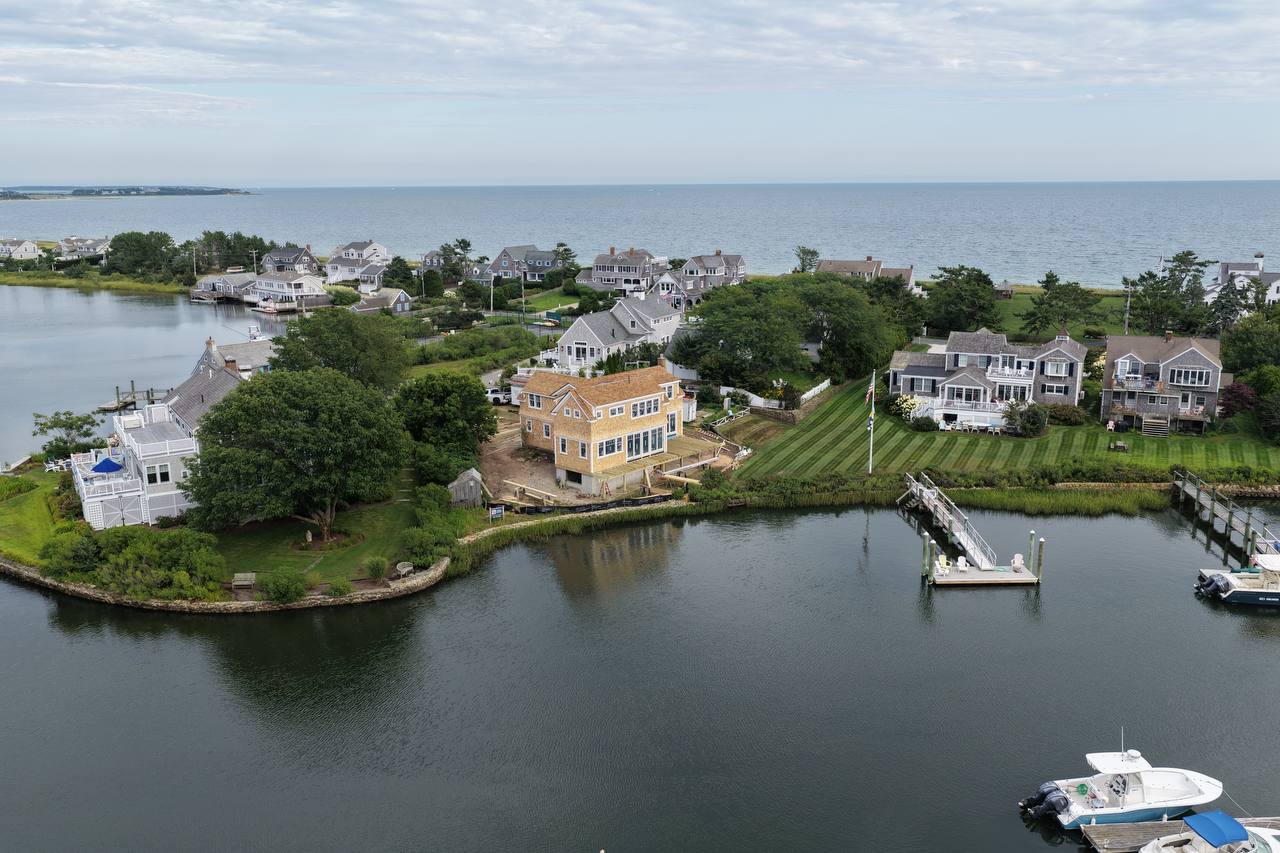
From the aerial perspective, you can see the scope of this project: a sprawling roof system that seems to change direction at every turn, with cedar and copper working together to create a composition that's both visually striking and engineered for Cape Cod's demanding coastal environment. This is the story of precision, planning, and the kind of master-level craftsmanship that turns a complex roof into architectural art.
Project at a Glance
- Location: Centerville, Massachusetts
- Status: In Progress
- Scope: Red cedar shingle roof, red copper roof sections, white cedar sidewall installation
- Materials: Premium red cedar roof shingles, red copper roofing panels, white cedar sidewall shingles
- Complexity: Multiple roof planes, varying pitches, complex valleys, dormers, brick chimney integration
- Team: ANPoint Exteriors
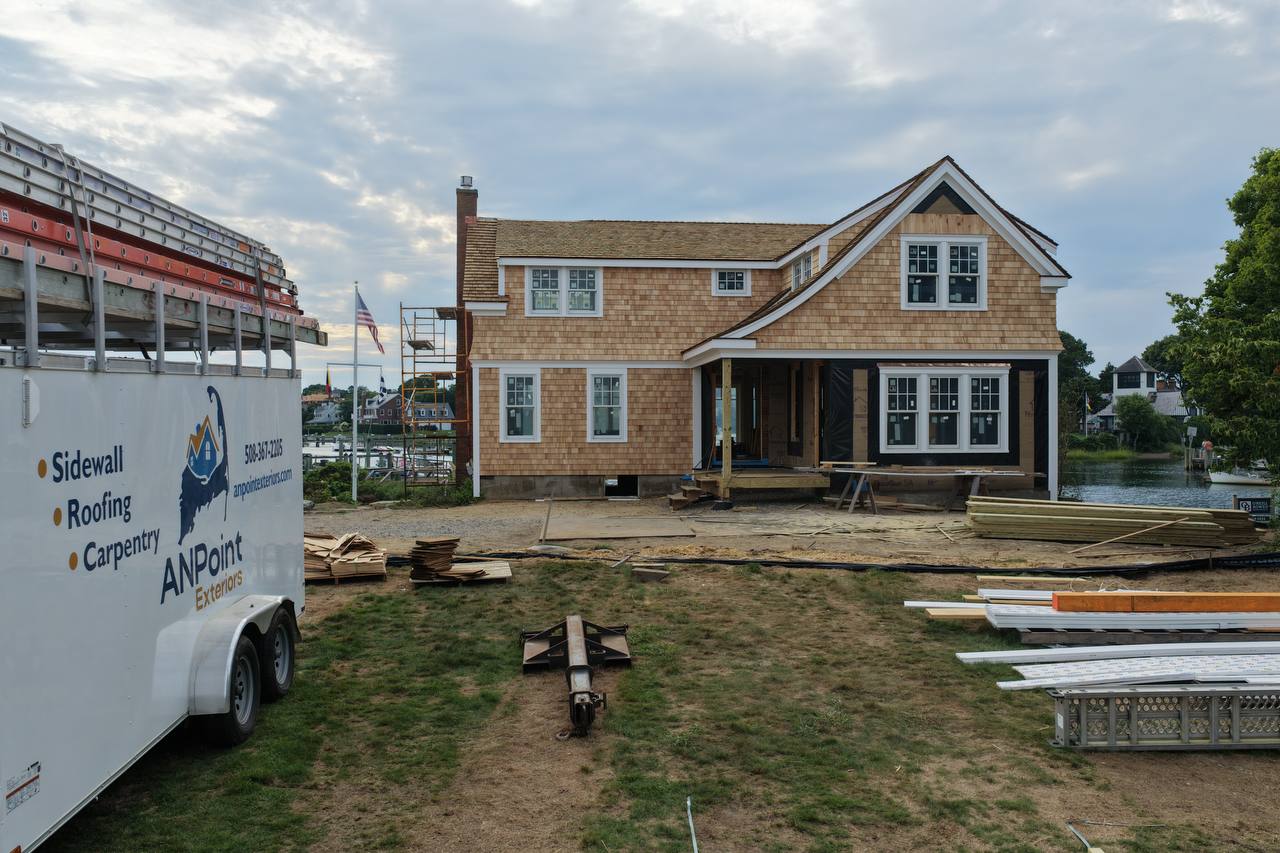
The Challenge of Complexity
Look at this roof from above and you'll immediately understand why this project separates master craftsmen from average roofers. This isn't a simple gable or even a standard hip roof. It's a composition of intersecting planes, varying pitches, multiple valleys, dormers, and architectural features that each demand individual attention and precise execution.
Every valley — where two roof planes meet at an angle — requires custom flashing and careful shingle placement to ensure water flows freely without finding purchase. Every dormer adds complexity, creating new intersections and requiring custom detailing. The brick chimney presents its own challenges, demanding precise copper flashing that integrates seamlessly with both the masonry and the surrounding cedar shingles.
But the real challenge isn't just the geometry — it's maintaining consistency across all that complexity. Every course of shingles must align perfectly, every valley must flow smoothly, and every transition must be watertight. On a roof this large and complex, there are dozens of decision points where an inexperienced crew might improvise. We plan each one in advance.
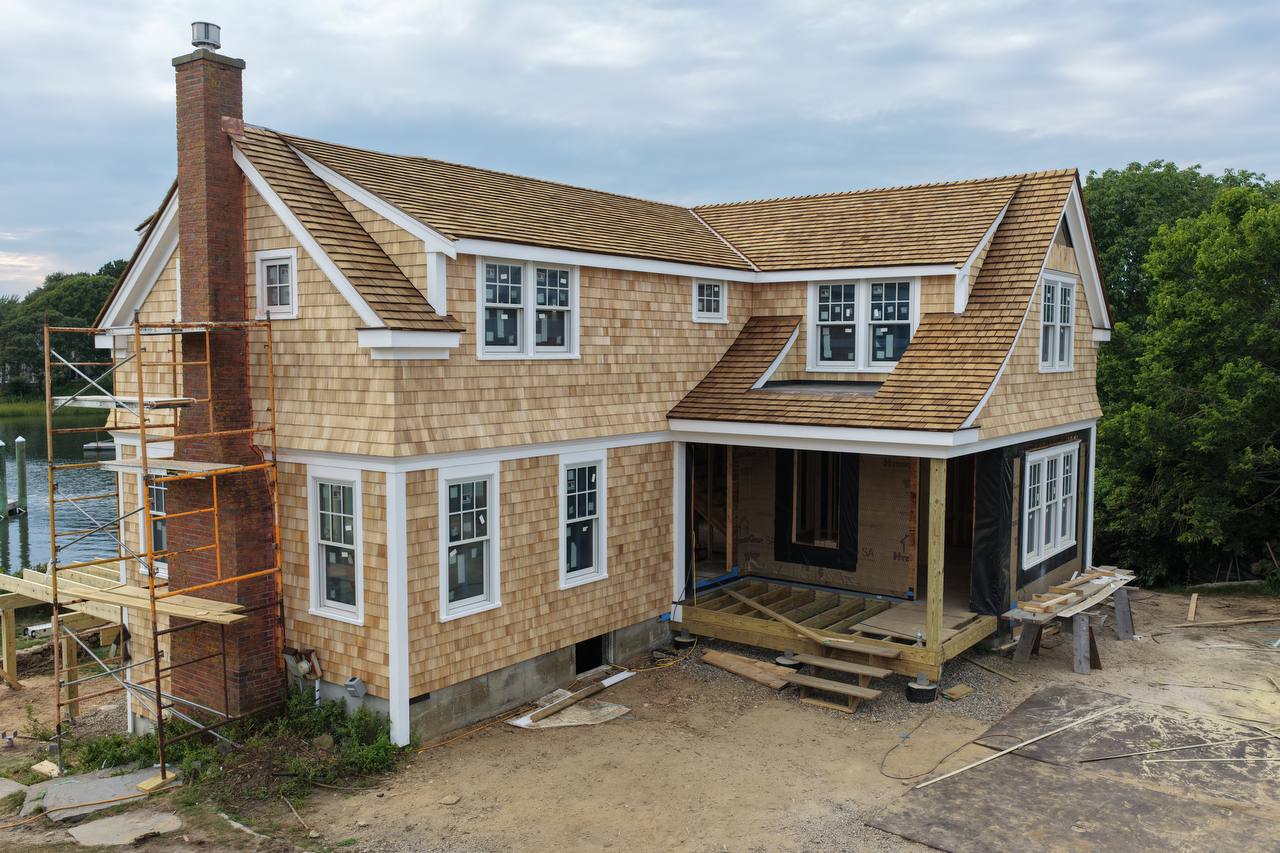
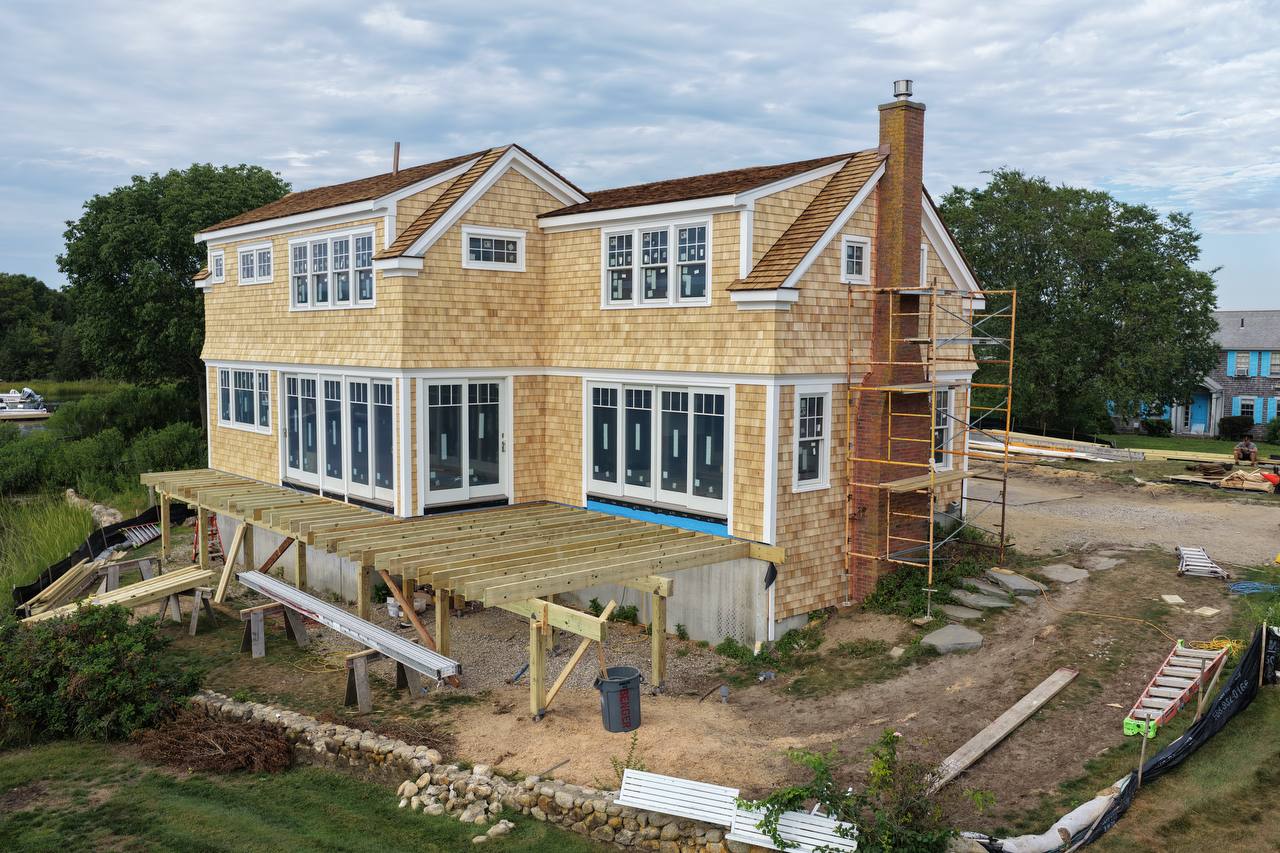
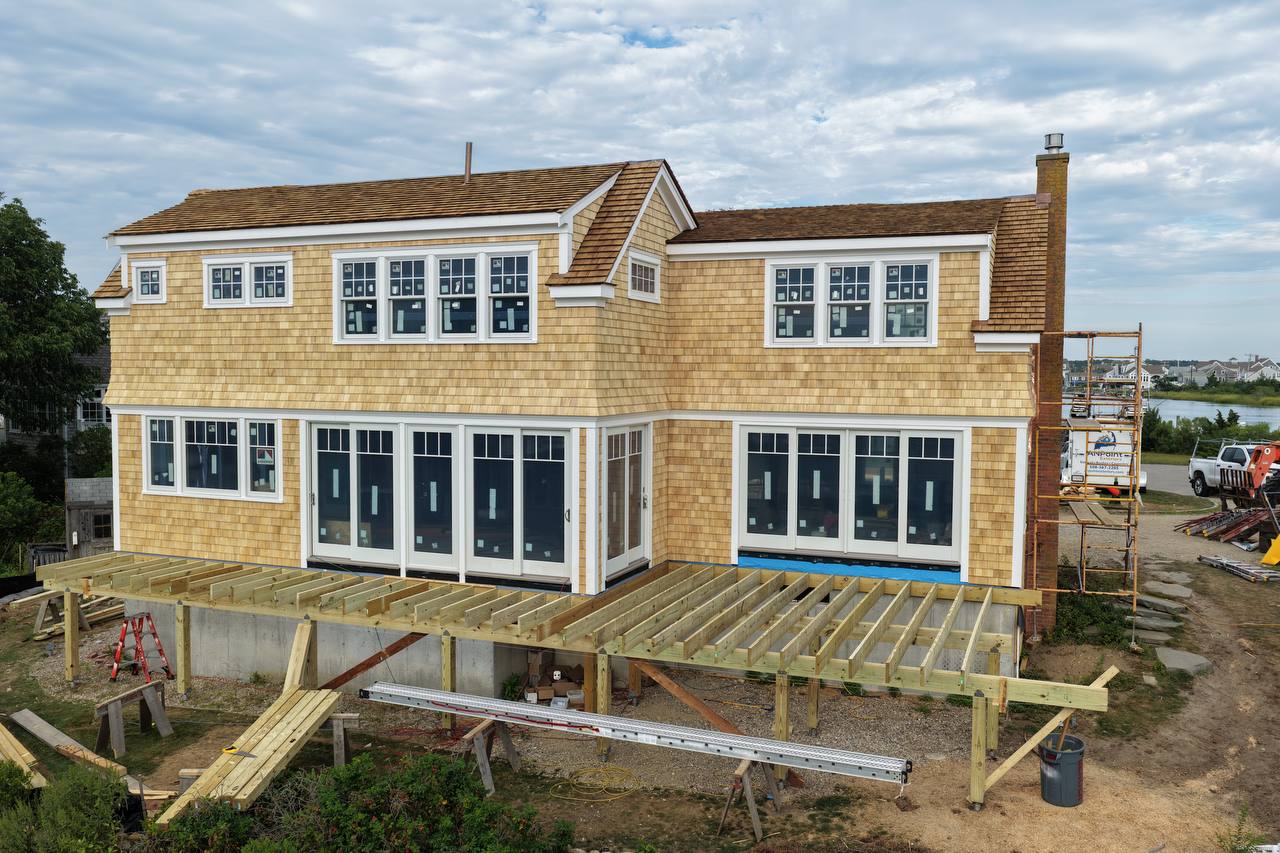
Red Cedar Shingles: Traditional Material, Modern Precision
The primary roofing material is premium red cedar shingles — the traditional choice for Cape Cod architecture and still the gold standard for coastal roofing. Red cedar offers natural resistance to salt air, moisture, and the harsh UV exposure that characterizes Cape Cod summers. But more than performance, cedar brings an irreplaceable aesthetic: warm, textured, and alive with natural variation.
Installing red cedar on a roof this complex requires skill and patience. Each shingle is hand-selected and positioned to create a harmonious blend of tones. We maintain consistent exposure across every plane — the amount of each shingle that's visible — ensuring the roof reads as a unified composition rather than a collection of separate sections.
The installation process is methodical. We start from the eaves and work upward, course by course, maintaining perfectly level lines even as the roof changes pitch and direction. Valleys are woven or cut with precision, hips are capped with care, and every penetration — from the chimney to vent pipes — receives custom flashing that integrates seamlessly with the cedar.
This is cedar roofing as it should be done: no shortcuts, no compromises, just the time-tested methods that have protected Cape Cod homes for generations.
Red Copper Roofing: Where Form Meets Function
Strategically placed throughout this roof system are sections of red copper roofing — a premium material choice that serves both aesthetic and functional purposes. Copper appears at key architectural features: the diamond-shaped section visible from above, around the chimney, and at critical transitions where different roof planes meet.
Copper is the ultimate roofing material for complex geometries. Unlike shingles, which must be layered and overlapped, copper can be formed into continuous sheets that eliminate seams and potential leak points. On this roof, copper is used where the geometry is most challenging — where multiple planes intersect, where pitch changes dramatically, or where water management is most critical.
But copper is also chosen for its beauty. Fresh copper has a warm, reddish-brown tone that complements the red cedar shingles beautifully. Over time, it will develop a distinctive patina — first darkening to brown, then eventually developing the iconic green verdigris that adorns historic Cape Cod buildings. This transformation is part of copper's appeal: it's a living material that records the passage of time.
Every piece of copper on this roof is custom-formed and fitted by hand. There are no pre-fabricated panels here — just traditional metalworking that requires measuring, cutting, bending, and seaming with absolute precision. This is tinsmith work in the old tradition, executed with modern tools and standards.
White Cedar Sidewalls: The Perfect Complement
While the roof commands attention with its red cedar and copper, the walls are being clad in white cedar sidewall shingles — a classic Cape Cod choice that provides visual balance and coastal durability. White cedar is naturally resistant to rot and insect damage, making it ideal for the humid, salty environment of Centerville's waterfront.
The white cedar sidewalls are installed with the same precision we bring to our roofs. Courses are perfectly level, corners are carefully detailed, and every opening — windows, doors, vents — receives custom trimming and flashing. The natural white tone of the cedar provides a crisp, clean backdrop that makes the white trim pop and allows the warm tones of the roof to stand out.
Like the red cedar roof, these white cedar sidewalls will weather naturally over time, developing a silvery gray patina that's iconic to Cape Cod architecture. But we're not rushing that process with accelerators or stains. We're letting the cedar age naturally, as it has on Cape Cod homes for centuries.
This is cedar siding installation as tailoring: the shingles follow the building's lines with precision, creating a skin that's both beautiful and protective.
Video: Watch the Installation in Progress
Waterfront Construction: Unique Challenges
Building on the waterfront in Centerville adds layers of complexity beyond the architectural challenges. The site is surrounded by water, boats, and docks — beautiful, but demanding careful logistics. Material delivery must be coordinated precisely. Staging areas are limited. And every aspect of the work must be planned to protect the sensitive waterfront environment.
The coastal location also dictates material choices and construction methods. Salt air is corrosive, attacking metal fasteners and degrading inferior materials. High winds from nor'easters test every shingle and seam. UV exposure is intense during summer months. Every material we've selected — red cedar, white cedar, copper — is chosen specifically for its ability to thrive in this demanding environment.
Working on the water also means we're mindful of our impact. Debris management is critical — no scrap materials can find their way into the water. Noise and disruption must be minimized in this residential waterfront community. And the finished result must not only perform flawlessly but also enhance the natural beauty of this privileged location.
Architectural Details: Windows, Dormers, and Chimneys
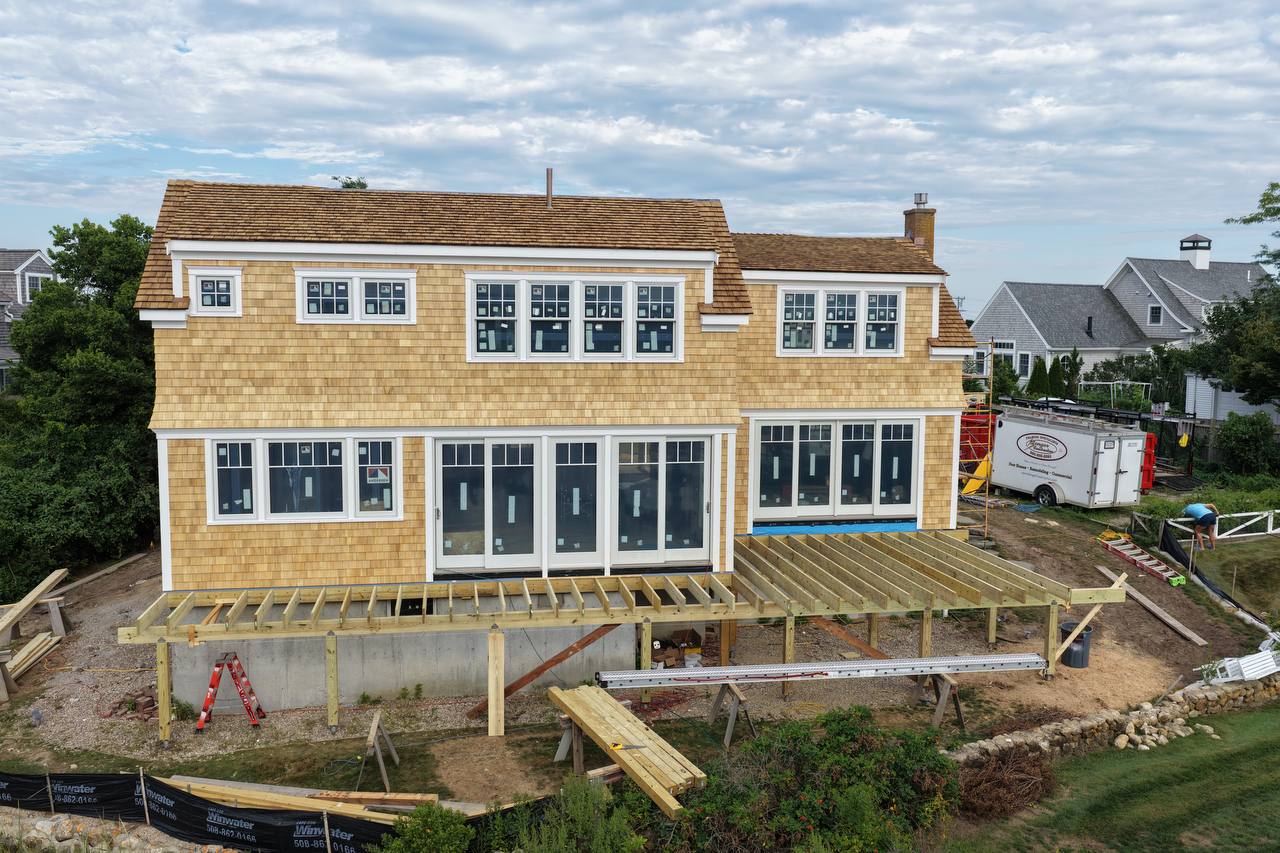
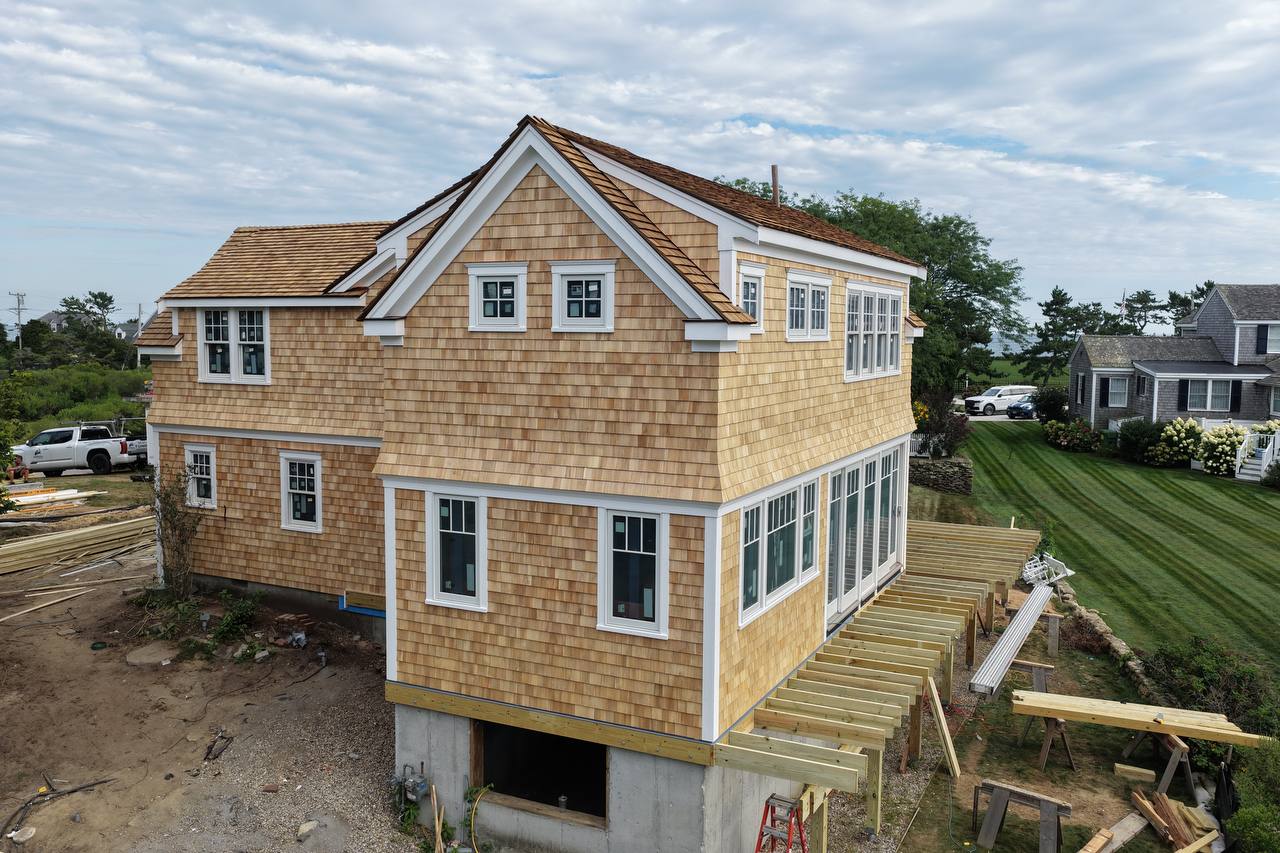
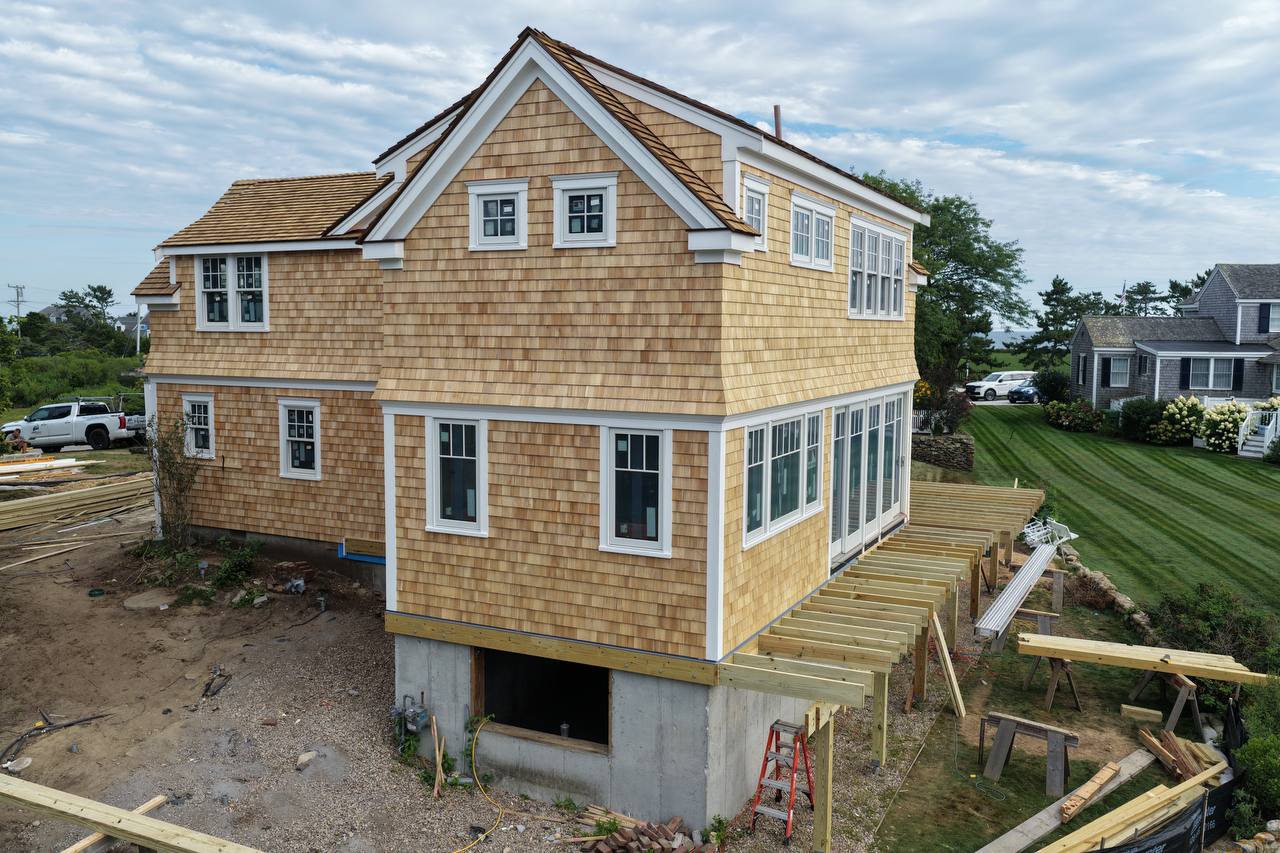
This Centerville residence is rich with architectural details that elevate it above standard construction. Multiple dormers punctuate the roof, each one requiring custom flashing and careful shingle integration. The windows are generously sized with crisp white trim that frames views of the water. And the prominent brick chimney serves as both functional element and architectural anchor.
Each dormer is a roofing project in miniature — it has its own roof plane, valleys where it meets the main roof, and sidewalls that must be integrated with the main structure. We treat each dormer with the same attention to detail we bring to the entire roof: precise flashing, perfectly aligned shingles, and watertight seams.
The brick chimney presents its own challenges. Copper flashing must be integrated with the masonry, creating a watertight seal that can accommodate the different expansion rates of brick and metal. The flashing must be stepped to follow the roof pitch and counter-flashed into the brick mortar joints. This is specialized work that requires knowledge of both roofing and masonry.
Every window and door receives similar care. Flashing is installed in the proper sequence — bottom first, then sides, then top — to ensure water flows away from the opening. Trim is fitted precisely, and the cedar shingles are cut and positioned to complement the trim work.
The Installation Process: Precision at Every Stage
Looking at the images, you can see the installation in various stages of progress. This is a project that unfolds methodically, with each phase building on the last. The roof decking is prepared, ice and water shield is applied at critical areas, and underlayment is installed across the entire surface. Only then do we begin laying shingles.
The crew works systematically, starting at the eaves and working upward. Starter strips are installed first, providing a solid base for the first course of shingles. Then course by course, the roof takes shape. Valleys are woven or cut as the work progresses. Hips and ridges are capped last, once the field shingles are complete.
Meanwhile, the sidewall installation proceeds on a different timeline. Scaffolding provides access to upper levels while the roof work continues above. The white cedar shingles are applied in level courses, with corners and trim receiving special attention. Every opening is flashed and trimmed as the work progresses.
Coordination is critical. The roofers, siding installers, and trim carpenters must work in harmony, each understanding how their work affects the others. This level of coordination comes from experience — from crews that have worked together on projects of this complexity before.
Material Quality: The Foundation of Excellence
No amount of skill can compensate for inferior materials, which is why we source only premium products for projects like this. The red cedar shingles are hand-split and hand-shaved, graded for quality, and selected for consistent thickness and grain. The white cedar sidewalls are similarly graded, ensuring uniformity and longevity.
The copper is pure, unalloyed, and sourced from reputable suppliers who guarantee its quality. It's thick enough to be durable but malleable enough to be formed into complex shapes. The fasteners are stainless steel or copper, chosen to prevent galvanic corrosion and ensure decades of reliable performance.
Even the underlayment and flashings are premium products. Ice and water shield protects vulnerable areas from ice dams and wind-driven rain. Synthetic underlayment provides a secondary moisture barrier across the entire roof. And every piece of flashing — whether copper or another compatible metal — is formed to exacting standards.
This commitment to material quality is non-negotiable. On a waterfront property in Centerville, where the environment is demanding and the expectations are high, only the best will do.
Key Takeaway: Complex roofs demand master-level craftsmanship. This Centerville waterfront project combines red cedar shingles, red copper roofing, and white cedar sidewalls on a multi-faceted structure that requires precise planning, skilled execution, and premium materials. The result will be an exterior that's both architecturally stunning and engineered to withstand the coastal environment for decades.
Centerville: A Cape Cod Community
Centerville is one of the seven villages of Barnstable, situated on the south shore of Cape Cod with access to both Nantucket Sound and freshwater ponds. It's a community that values its architectural heritage and its natural beauty. Waterfront properties like this one are treasured, and homeowners here understand that their choices in materials and craftsmanship affect not just their home but the character of the entire community.
Working in Centerville means understanding local building codes, respecting the coastal environment, and delivering work that meets the high standards of discerning homeowners. It means coordinating with local suppliers, navigating the logistics of waterfront construction, and delivering a finished product that enhances both the property and the neighborhood.
This project exemplifies what's possible when skilled craftsmen, premium materials, and thoughtful design come together. The red cedar and copper roof will weather gracefully, developing character with each passing season. The white cedar sidewalls will age to a silvery gray that's quintessentially Cape Cod. And the entire structure will stand as a testament to the enduring appeal of traditional materials installed with modern precision.
Craftsmanship That Defines Cape Cod
From the first shingle to the final copper seam, this Centerville project demonstrates the craftsmanship that has defined Cape Cod architecture for centuries. Red cedar roofs, white cedar sidewalls, and copper accents are the traditional materials of the region, chosen for their beauty, durability, and ability to weather gracefully in the coastal environment.
But tradition alone isn't enough. Today's homeowners expect modern performance alongside timeless aesthetics. They want roofs that are not only beautiful but also energy-efficient, weather-resistant, and built to last. They want siding that requires minimal maintenance while providing maximum protection. And they want craftsmen who understand both the heritage of Cape Cod architecture and the demands of contemporary construction.
If your Cape Cod home deserves this level of craftsmanship, explore our cedar roofing and cedar siding services. See the difference that master-level installation makes, and discover why ANPoint Exteriors is the trusted choice for high-end exteriors in Centerville, across Cape Cod, and throughout the South Shore.
Ready for Cape Cod's Finest Cedar and Copper Craftsmanship?
From complex red cedar roofs with copper accents to white cedar sidewalls, we bring master-level craftsmanship to every waterfront and inland project.
Call (508) 367-2205From the complex roof geometry to the precise cedar siding installation, every aspect of this Centerville project reflects our commitment to excellence. See more of our work to understand why ANPoint Exteriors is the trusted choice for discerning homeowners who demand the best in cedar roofing, copper roofing, and cedar siding throughout Cape Cod and the South Shore.