
How Long Does an EPDM Roof Last? Lifespan, Maintenance, and Signs of Wear
EPDM roofing is designed for long-term performance and is commonly used on flat and low-slope roofs, including those on homes, additions, and garages. However, even a durable rubber membrane is exposed to sunlight, rain, temperature changes, and physical wear over time.
How long can an EPDM roof last? What affects its lifespan, and how can you tell when it needs attention? This guide covers the main factors that influence durability, practical maintenance tips, and the warning signs that may indicate a need for repairs or replacement.
How Long Does an EPDM Roof Last?
With proper installation and maintenance, an EPDM roof can last 20–30 years or longer. However, this is a general estimate, not a guarantee for every roof.
The actual service life depends on several factors:
- The quality and thickness of the membrane
- Proper roof substrate preparation
- The attachment method and installation quality
- The condition of seams, flashing, and roof edges
- The effectiveness of the drainage system
- Weather conditions and environmental exposure
- Regular inspections and timely repairs
For example, an EPDM membrane may remain in good condition for many years, while a defect around flashing or a drainage problem can cause a leak long before the material reaches the end of its expected service life.
For this reason, the lifespan of an EPDM roof should be assessed based on the condition of the entire roofing system, not just the age of the membrane.
What Affects the Lifespan of an EPDM Roof?
1. Installation Quality
Proper installation is one of the most important factors affecting how long an EPDM roof lasts.
Before installation, the substrate must be prepared, an appropriate attachment method selected, and the manufacturer's specifications followed. Particular attention is required around seams, wall transitions, pipe penetrations, and other areas where the membrane meets different roof components.
If these details are not installed correctly, water can enter beneath the membrane even when the material itself remains in good condition.
2. Sun Exposure and Temperature Changes
EPDM is resistant to ultraviolet radiation and retains its flexibility as temperatures change. These properties help the material withstand prolonged outdoor exposure.
Nevertheless, repeated heating and cooling affect the entire roofing assembly. Over time, seams and flashing details may require attention, particularly if they were not installed correctly in the first place.
3. Drainage and Ponding Water
A flat roof needs more than a waterproof membrane. It also needs an effective drainage system.
If water consistently accumulates on the roof, the underlying cause should be investigated. It may be related to insufficient slope, blocked drains, or the design of the roof itself.
EPDM does not replace a properly designed drainage system. Drainage problems should be addressed rather than left unresolved.
4. Wind and Coastal Conditions
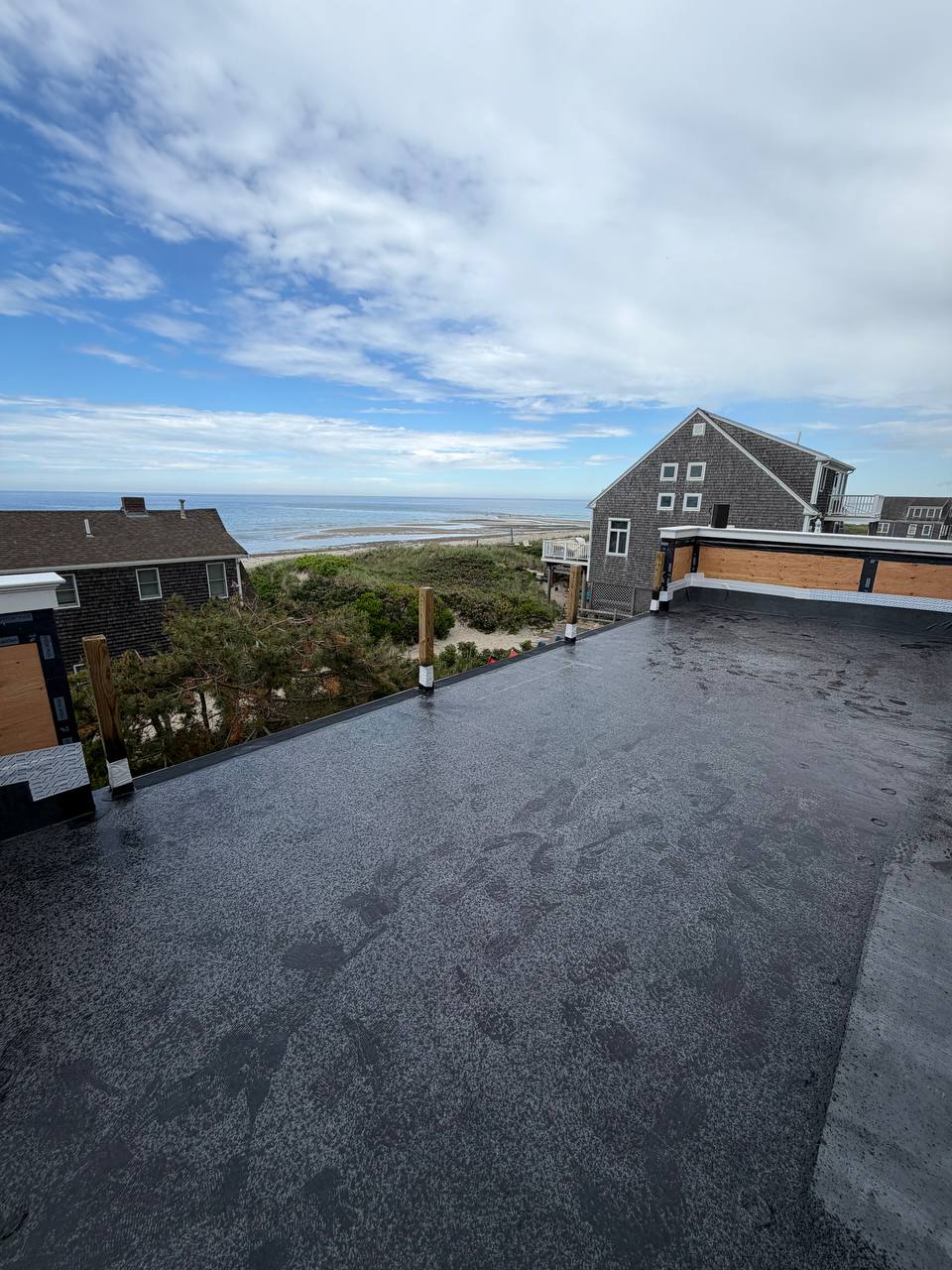
On Cape Cod and the South Shore, roofs are exposed to strong winds, rainfall, and salt air. These conditions should be considered when selecting and installing a roofing system.
Roof edges, corners, fasteners, and flashing deserve particular attention. Metal components should also be inspected because exposure to salt air can accelerate corrosion in certain materials.
A reliable roof in a coastal environment depends on appropriate component selection, quality installation, and the condition of the entire roofing assembly.
5. Regular Inspections and Timely Maintenance
Even a durable membrane needs periodic inspection. Small punctures, blocked drains, and deteriorating flashing are easier to address when identified before they lead to more extensive damage.
If leaks and other signs of deterioration are ignored, water can reach the underlying roof layers and increase the cost of repairs.
How to Maintain an EPDM Roof and Extend Its Service Life
Maintaining an EPDM roof does not have to be complicated. The key is to identify potential problems before they become more serious.
Inspect the Roof Surface Periodically
Check the condition of the membrane, accessible seams, roof edges, and flashing. Look for cuts, punctures, lifting, separation, and other visible damage.
If an inspection requires accessing the roof, consider the fall risk. Do not climb onto the roof without appropriate safety precautions.
Keep Drains and Gutters Clear
Leaves, branches, and other debris can obstruct drainage. Blocked drains increase the risk of water accumulation and should be cleared promptly.
During inspections, also check for signs of damage around drainage outlets and the points where the membrane connects to the drainage system.
Remove Debris Carefully
Branches and sharp objects can damage the membrane. Debris should be removed carefully, without using tools or methods that could puncture or tear the roofing material.
Do not use cleaning products, solvents, or repair compounds unless their compatibility with the specific EPDM system has been confirmed.
Check the Roof After Severe Weather
After storms or strong winds, inspect accessible areas of the roof, including edges and flashing. If you notice leaks or visible damage, arrange a professional assessment rather than putting it off.
Routine maintenance does not replace a professional inspection, particularly as the roof gets older.
What Are the Signs of EPDM Roof Deterioration?
The age of a roof alone does not mean it needs to be replaced. Its actual condition and the performance of the entire roofing system matter more.
Here are some warning signs to watch for.
Leaks inside the building. Damp ceiling spots, water stains on walls, or unexplained moisture indoors may indicate a roofing problem. However, the source of a leak is not always directly above the visible stain.
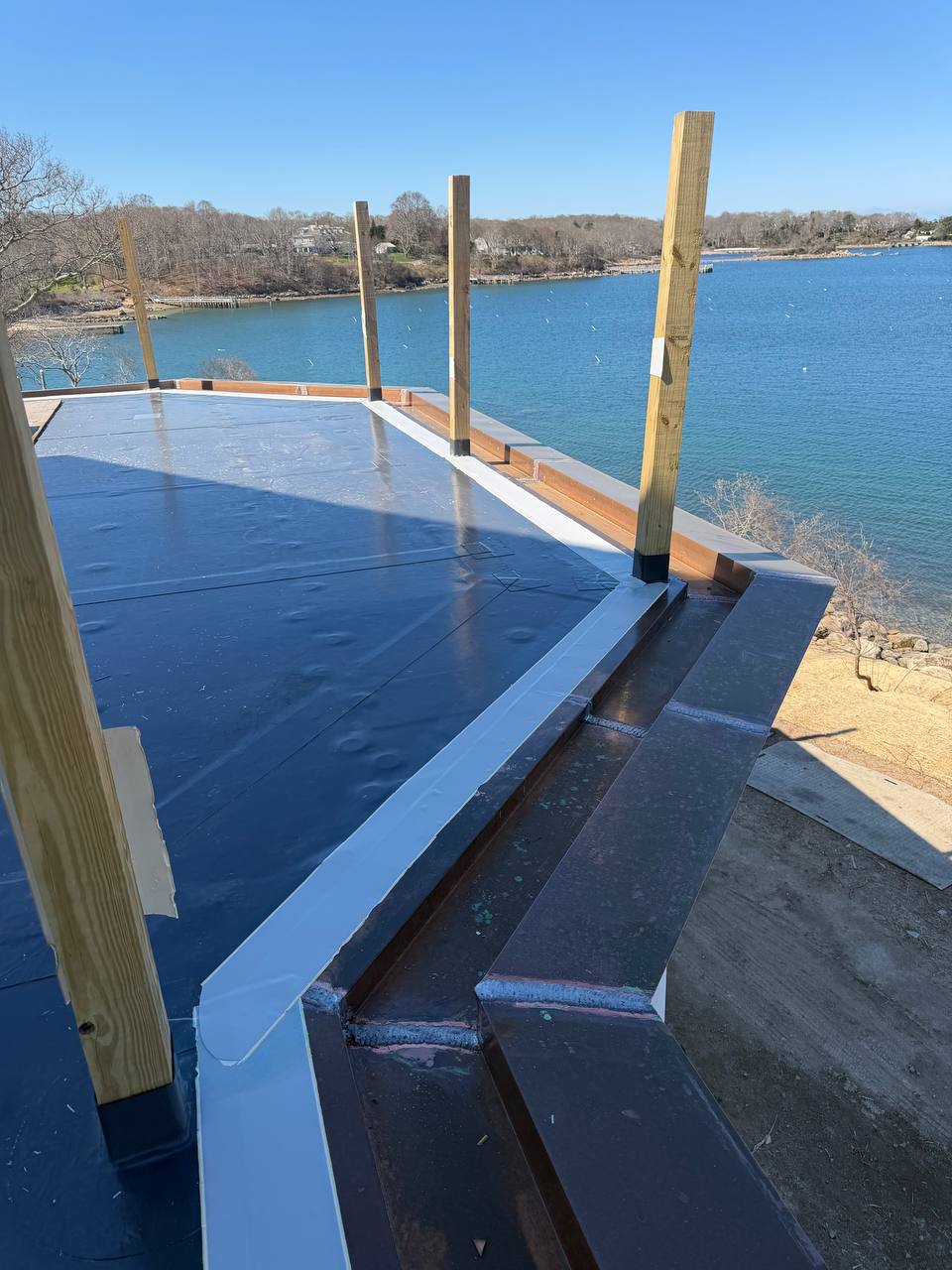
Membrane damage. Cuts, punctures, and other breaks in the membrane need to be assessed. Whether a localized repair is possible depends on the size and location of the damage and the condition of the surrounding material.
Problems with seams and flashing. Damaged joints, lifting membrane edges, or deteriorating flashing should be investigated to determine the cause and scope of the necessary work.
Damage around drains and penetrations. Areas around pipes, ventilation outlets, and drainage components are particularly important to the roof's watertight integrity. Defects in these locations can allow water to enter the building.
Persistent ponding water. If water regularly accumulates on the roof, the drainage system and roof surface should be evaluated. This does not automatically mean the membrane needs replacement, but the underlying issue should be addressed.
None of these signs automatically means the entire EPDM roof must be replaced. The cause of the problem and the condition of the complete roofing system need to be assessed before deciding on the appropriate solution.
When Can an EPDM Roof Be Repaired, and When Is Replacement Necessary?
The decision to repair or replace an EPDM roof depends on the extent of the damage, the age of the membrane, and the condition of the underlying roof layers.
When a Repair May Be Enough
A localized repair may be appropriate when the damage is limited to a small area and the rest of the membrane remains in serviceable condition. For example, a roofing professional may determine that a localized puncture or damaged flashing detail can be repaired without replacing the entire roof.
The repair materials must be compatible with the existing EPDM system, and any underlying cause of the damage should also be addressed.
When to Consider Replacement
Replacement may be necessary if the membrane has widespread damage, seams repeatedly lose their watertight integrity, or water has damaged the underlying roof layers.
It is also important to consider how frequently problems occur and whether continued repairs are a practical option given the condition of the entire roof assembly.
The decision should not be based on age alone. An EPDM membrane installed many years ago may still be performing well, while a relatively new roof may require significant work because of installation defects or drainage problems.
How to Assess an EPDM Roof on Cape Cod and the South Shore
For homes in coastal Massachusetts, an assessment should consider more than the condition of the membrane. Wind, rainfall, and salt air can all affect the roofing system and its components.
When inspecting a flat or low-slope roof, it is worth checking:
- The membrane's integrity and visible seams
- The condition of roof edges, flashing, and penetrations
- Drainage outlets and overall water flow
- Signs of leaks inside the building
- The condition of accessible roofing components
If your roof leaks repeatedly, shows damage after a storm, or is approaching the end of its expected service life, a professional inspection can help determine the appropriate next step.
Need an EPDM Roof Inspection or Replacement on Cape Cod or the South Shore?
An EPDM roof can last for decades, but its longevity depends on installation quality, the condition of the entire roofing system, and how promptly problems are addressed.
ANPoint Exteriors provides roofing services for homeowners across Cape Cod and the South Shore, Massachusetts. If you notice membrane damage, signs of a leak, or drainage problems, an assessment of your roof can help determine whether repairs may be sufficient or replacement should be considered.
Contact ANPoint Exteriors to discuss your roof's condition and explore the right solution for your home.