
How Much Does Siding Cost in Cape Cod? A Guide to Materials & Installation
If you are planning to replace the siding on a Cape Cod home, the first question is usually simple: how much will it cost?
The problem is that siding prices are rarely as straightforward as a single number per square foot. Two houses of the same size can have very different project costs depending on the material, condition of the existing exterior, number of windows and doors, architectural details, accessibility, and the amount of preparation required before installation.
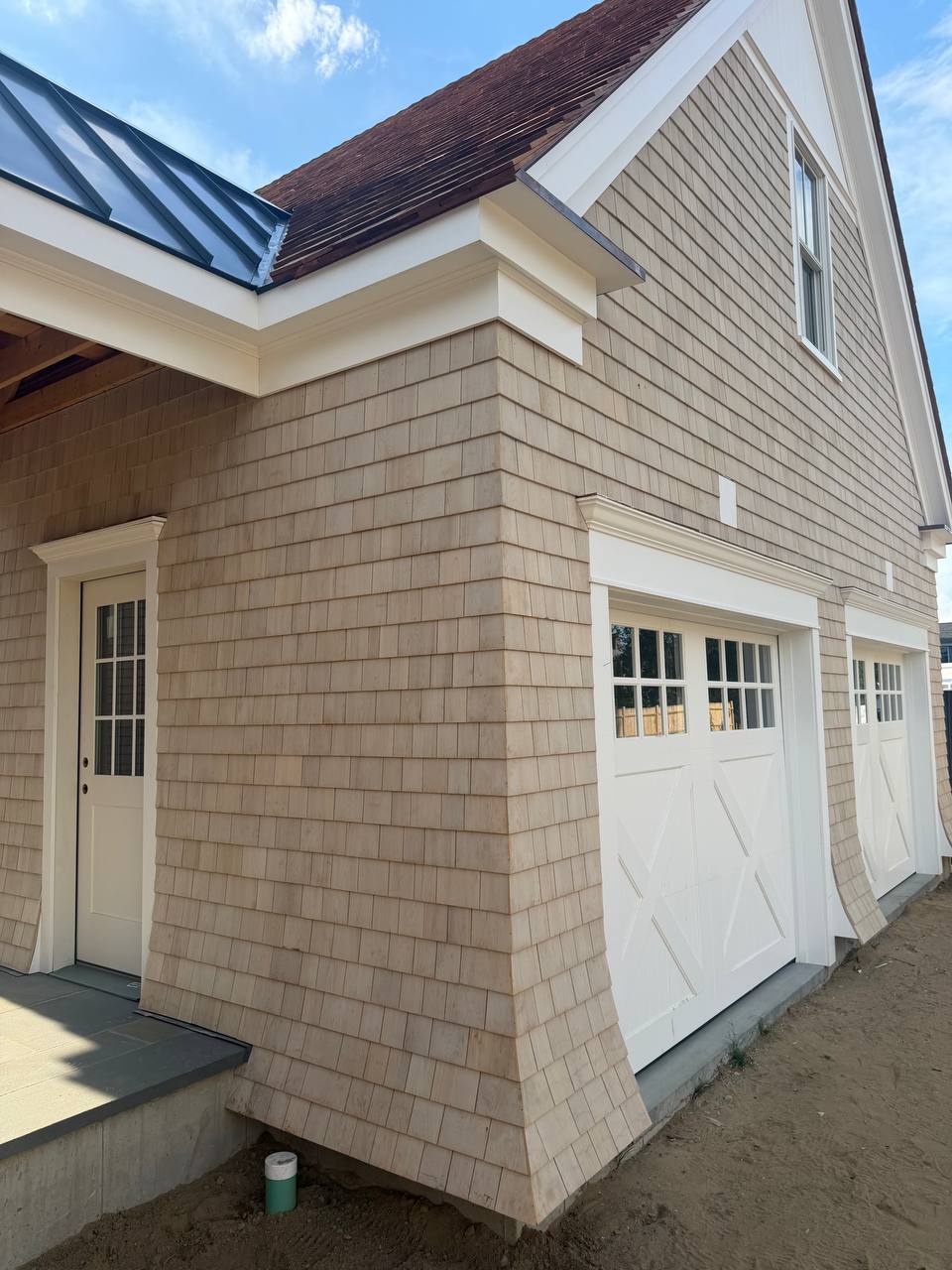
As a general planning range, siding projects can cost approximately $10–$20 per square foot, but this is only a starting point. Some materials and more complex projects can fall outside this range.
For a more useful estimate, you need to look at what is included in the project and what can change the final price.
This guide explains the typical cost of siding in Cape Cod, compares common materials, shows how a project estimate can be calculated, and explains which factors can increase or reduce the total.
What Is the Average Cost of Siding in Cape Cod?
A reasonable starting range for residential siding is approximately:
$10–$20 per square foot
This range should not be treated as a fixed Cape Cod siding price. It is a planning figure that can help homeowners understand the approximate scale of a project before receiving an individual estimate.
For example, if the area requiring siding is approximately 2,000 square feet:
| Cost per sq. ft. | Approximate project cost |
|---|---|
| $10 | $20,000 |
| $12 | $24,000 |
| $15 | $30,000 |
| $18 | $36,000 |
| $20 | $40,000 |
So a 2,000-square-foot siding project could potentially fall somewhere around $20,000–$40,000, depending on the specific material and project conditions.
But there is an important detail here.
The square footage of the house is not necessarily the same as the square footage of siding.
A home's exterior siding area depends on its actual wall surfaces, gables, additions, garages, dormers, porches, and other architectural features.
That is one reason why a contractor cannot accurately price a project based only on the home's interior living area.
How Is Siding Cost Calculated?
A simplified calculation looks like this:
Siding area × material and installation cost per square foot = basic project cost
But a real project estimate may also include:
- removal of existing siding;
- disposal;
- substrate preparation;
- moisture-related repairs;
- flashing;
- trim;
- corner boards;
- window and door detailing;
- scaffolding or other access equipment;
- architectural features;
- cleanup.
For example, imagine a home requires 2,000 square feet of siding and the selected system costs $15 per square foot.
2,000 × $15 = $30,000
That gives a starting project figure of $30,000.
If the existing siding has to be removed and the wall underneath requires significant preparation, the final price will be higher.
If the exterior is relatively straightforward and requires little preparation, the final cost may stay closer to the initial calculation.
This is why homeowners should be careful when comparing quotes based solely on the lowest price per square foot.
Siding Prices by Material
Different materials have different costs, maintenance requirements, appearances, and expected lifespans.
Here is a practical comparison of common siding options used for Cape Cod homes.
| Siding Material | Starting Price* | Typical Lifespan | Maintenance |
|---|---|---|---|
| PVC Siding | From $12/sq. ft. | 30–50+ years | Low |
| Wood Siding | From $15/sq. ft. | 15–30 years | High |
| Clapboard Siding | From $14/sq. ft. | 20–40 years | High when wood |
| Fiber Cement | From $18/sq. ft. | 30–50 years | Low to moderate |
| Cedar Siding | From $20/sq. ft. | 20–40+ years | Moderate to high |
*Starting prices are planning figures and do not represent a fixed quote.
The cheapest material is not necessarily the least expensive option over the entire life of the house.
A homeowner should consider both initial installation cost and long-term maintenance.
PVC Siding Cost
PVC siding starts at approximately $12 per square foot based on the project's material and installation requirements.
One of its main advantages is relatively low maintenance.
PVC can be a practical choice for homeowners who want an exterior that handles moisture well without the ongoing painting and refinishing associated with natural wood.
For a coastal property, this can be particularly appealing when the goal is to reduce routine exterior maintenance.
The final cost still depends on the house itself. Complex trim, multiple stories, difficult access, and extensive preparation can increase the project price.
Fiber Cement Siding Cost
Fiber cement siding starts at approximately $18 per square foot.
It is often selected by homeowners who want the appearance of painted wood combined with a different maintenance profile.
Fiber cement can be a strong option for homes where durability, appearance, and long-term exterior performance all matter.
As with other materials, the price should be evaluated as part of the complete installation rather than simply comparing the material cost.
Wood Siding Cost
Wood siding starts at approximately $15 per square foot, depending on the type of wood, profile, preparation, and installation.
Natural wood can be particularly appropriate for traditional Cape Cod and New England architecture.
The tradeoff is maintenance.
Wood siding may require periodic painting, staining, inspection, and repair. Moisture exposure can also become a concern if damaged areas are not addressed.
For homeowners who value natural materials and architectural authenticity, the additional maintenance may be a worthwhile tradeoff.
Cedar Siding Cost
Cedar siding starts at approximately $20 per square foot.

Cedar is often chosen for premium coastal properties and homes where natural wood character is an important part of the design.
Its appearance works particularly well with traditional Cape Cod architecture.
However, cedar should not be considered maintenance-free. Exposure to moisture and weather means the exterior needs to be inspected and maintained properly over time.
Clapboard Siding Cost
Clapboard siding starts at approximately $14 per square foot, depending on the material and installation requirements.
Clapboard is especially associated with traditional New England architecture and can be a natural fit for Cape Cod homes.
It is important to distinguish between clapboard as a siding profile and the material used to produce it. A traditional horizontal clapboard appearance can be created using different siding materials.
What Makes Siding More Expensive?
Material is only one part of the estimate.
In many projects, the biggest differences in price come from the condition and complexity of the house.
1. Removing Existing Siding
If the old siding needs to be removed before the new material is installed, the project requires additional labor and disposal.
Some homes may also have multiple layers of old siding.
The more material that has to be removed, sorted, and disposed of, the more time the project can take.
2. Condition of the Substrate
This is one of the most important variables.
Once old siding is removed, the underlying wall surfaces may reveal:
- damaged sheathing;
- rot;
- moisture intrusion;
- deteriorated framing;
- areas that were previously repaired incorrectly.
These issues cannot always be identified from the outside before the siding is removed.
That is why an estimate based only on visible siding can change once the exterior is opened.
3. Windows and Doors
Every window and door creates another transition in the siding system.
These areas require careful detailing and flashing to manage water.
A house with many windows, doors, and architectural openings can therefore require more installation time than a simple rectangular exterior of the same size.
4. Corners, Gables and Dormers
Cape Cod homes often have architectural features that add complexity.
Dormers, gables, roof intersections, porches, additions, and multiple rooflines all create additional cuts, transitions, and trim work.
This can increase labor even when the total wall area is relatively modest.
5. Number of Stories
A one-story home with easy access around the entire exterior is generally simpler to work on than a multi-story property.
Additional access equipment and more difficult working conditions can affect labor costs.
6. Coastal Exposure
A home located in a highly exposed coastal environment may require particular attention to installation details, flashing, moisture management, and fastening.
The material itself is not the only consideration.
A siding system needs to be installed appropriately for the conditions in which it will operate.
Does Removing Old Siding Increase the Cost?
Yes.
Siding replacement and siding installation are not always the same type of project.
If a new home is being sided for the first time, there is no existing siding to remove.
During a replacement project, however, the old material may need to be removed before the new exterior can be installed.
This adds:
- labor;
- disposal;
- additional project time;
- potential preparation work.
It can also reveal problems that were hidden behind the old siding.
For that reason, a replacement quote should clearly explain whether removal and disposal are included.
What About Rot or Water Damage?
Water damage is one of the costs that homeowners cannot always predict in advance.
A section of siding may look acceptable from the outside while the material underneath has deteriorated.
This can happen around:
- windows;
- doors;
- roof-to-wall transitions;
- corners;
- lower wall sections;
- areas where water has repeatedly entered.
If damaged substrate is discovered, it should be addressed before new siding is installed.
Covering a moisture problem with new siding does not solve the underlying issue.
This is one reason why a very low replacement estimate can sometimes change after the existing siding is removed.
Is It Cheaper to Repair Siding Than Replace It?
Often, yes, but it depends on the extent of the damage.
If only a small section is damaged and the rest of the siding is in good condition, repair may be the more economical solution.
For example, replacing several boards after storm damage is very different from dealing with widespread deterioration across an entire exterior.
Repair becomes less attractive when:
- damage is widespread;
- the existing siding is near the end of its useful life;
- moisture problems affect multiple areas;
- matching the old material is difficult;
- repeated repairs have already been performed.
In those situations, replacement may provide better long-term value.
Siding repair can be a useful approach to compare the cost of the immediate repair with the expected remaining life of the existing siding.
Does More Expensive Siding Always Last Longer?
No.
Price and lifespan are related in some cases, but they are not interchangeable.
A more expensive material may offer a particular appearance, lower maintenance, or other characteristics that justify the additional cost.
At the same time, a less expensive material can be a sensible choice if it meets the homeowner's needs and is installed correctly.
For example, a homeowner may choose PVC because low maintenance is more important than having natural wood.
Another homeowner may choose cedar despite its higher initial cost because the appearance and architectural character are worth the additional maintenance.
The better question is:
What do you get for the additional investment?
That may include durability, reduced maintenance, a particular appearance, or better compatibility with the home's architecture.
How Much Should You Budget for a Cape Cod Siding Project?
Instead of starting with one fixed number, it is more useful to build a preliminary budget in stages.
Small or straightforward project
A smaller exterior with limited architectural complexity may fall toward the lower end of the general price range.
Average full-home replacement
A larger whole-house project with standard preparation, several windows, doors, and typical architectural details will generally require a larger budget.
Complex coastal property
A multi-story home with extensive trim, dormers, multiple additions, difficult access, existing siding removal, or substrate repairs can move significantly above a basic square-foot calculation.
This is why two homeowners can receive very different quotes for houses that appear similar in size.
Example: Comparing Two Siding Projects
Consider two homes, both requiring approximately 2,000 square feet of new siding.
Home A
- 2,000 sq. ft. of siding
- straightforward exterior
- easy access
- limited trim
- existing surface in good condition
- minimal preparation
At $12 per square foot:
2,000 × $12 = $24,000
Home B
- 2,000 sq. ft. of siding
- multiple dormers
- several roof intersections
- many windows
- difficult access
- old siding removal
- additional substrate preparation
At $18 per square foot:
2,000 × $18 = $36,000
Both homes have the same approximate siding area.
Yet the projects are very different.
This is why asking only "What do you charge per square foot?" does not tell you the whole story.
What Should Be Included in a Siding Estimate?
When comparing siding contractors, ask for a clear description of what the quoted price covers.
A useful estimate should make it possible to understand:
- which siding material and profile are being proposed;
- how much siding is included;
- whether old siding removal is included;
- whether disposal is included;
- what preparation is included;
- how damaged substrate is handled;
- what trim is included;
- how windows and doors will be detailed;
- whether flashing work is included;
- whether the quote includes cleanup;
- what warranty coverage applies.
This makes comparing estimates much easier.
A quote that appears more expensive may actually include work that another contractor has left out.
How Long Does a Siding Project Take?
A typical residential siding installation or replacement project can take approximately 5–10 days.
The actual timeline depends on:
- size of the home;
- siding material;
- amount of demolition;
- preparation requirements;
- number of workers;
- architectural complexity;
- weather;
- unexpected conditions.
Weather can be particularly relevant for Cape Cod and South Shore projects.
A contractor may have a planned schedule, but exterior work can be affected by rain, strong winds, or other conditions that make installation impractical.
Siding should not be rushed simply to meet an arbitrary completion date.
Can You Save Money on Siding Without Sacrificing Quality?
Yes, but the best savings usually come from making smart project decisions rather than choosing the cheapest installation.
For example, you can compare materials based on both initial price and maintenance requirements.
You can also evaluate whether every existing exterior element needs to be replaced or whether some components can remain in good condition.
However, there are areas where cutting costs can create problems later.
Avoid saving money on:
- proper substrate preparation;
- flashing;
- moisture management;
- appropriate fastening;
- necessary repairs;
- qualified installation.
These are not cosmetic details.
A siding system can look excellent when it is first completed while still having underlying installation problems that become expensive later.
Is Siding a Good Investment for a Cape Cod Home?
New siding can improve both the appearance and functional condition of an exterior.
It can also make sense when the existing siding has reached the point where repeated repairs and maintenance are becoming difficult to justify.
However, the value of a siding project is not simply the amount spent on the material.
Consider the total cost over time.
For example:
Lower initial cost + high maintenance + frequent repairs
may not necessarily be cheaper than:
Higher initial cost + lower maintenance + longer useful life.
The right comparison is therefore the total ownership cost, not just the installation price.
Choosing Siding Based on Your Budget
If budget is your main consideration, start by establishing what matters most.
If your priority is lower initial cost
Compare materials such as PVC, wood, and clapboard based on the actual scope of your project rather than material price alone.
If your priority is lower maintenance
PVC and fiber cement may be worth considering.
If appearance is the priority
Cedar, wood, and clapboard can offer the traditional character many Cape Cod homeowners want.
If long-term value is the priority
Look at initial cost, expected lifespan, maintenance, repair requirements, and the condition of the existing exterior together.
There is no reason to pay for features you do not need. But there is also little value in choosing a cheap installation that creates moisture or maintenance problems later.
Siding Cost vs. Siding Value
The cheapest siding project is not necessarily the best deal.
Imagine two estimates:
Estimate A: $25,000
Estimate B: $32,000
At first glance, the $25,000 estimate looks better.
But what if Estimate A does not include old siding removal, certain trim work, or substrate repairs, while Estimate B includes those items?
The actual comparison may be very different.
This is why homeowners should compare scope, not just price.
A good siding estimate should allow you to understand exactly what you are paying for.
When Is the Best Time to Replace Siding?
There is no single month that is automatically best for every project.
Scheduling depends on the material, contractor availability, weather, and condition of the house.
For Cape Cod and South Shore homeowners, planning ahead can be particularly useful because exterior work is seasonal and demand can be higher during favorable weather.
If the siding is already showing significant deterioration, waiting for the "perfect" season may not be the best strategy.
The more important question is whether the exterior can safely and effectively remain in its current condition until the planned project.
A Practical Way to Compare Siding Quotes
Before choosing a contractor, put the estimates side by side.
Compare:
| Question | Contractor A | Contractor B |
|---|---|---|
| Siding material specified? | ||
| Removal included? | ||
| Disposal included? | ||
| Preparation included? | ||
| Substrate repairs explained? | ||
| Flashing included? | ||
| Trim included? | ||
| Cleanup included? | ||
| Warranty explained? | ||
| Estimated timeline? |
This simple comparison can reveal why two apparently similar quotes have different prices.
It also makes it easier to identify costs that may appear later as change orders.
Final Takeaway: How Much Does Siding Cost in Cape Cod?

For planning purposes, a typical siding project may fall around $10–$20 per square foot, with the final price determined by the material and the specific conditions of the home.
For a 2,000-square-foot siding area, that gives a rough starting range of $20,000–$40,000.
But the most important factors are not just square footage.
The final cost depends on:
- siding material;
- home size and actual siding area;
- existing siding removal;
- substrate condition;
- windows and doors;
- trim and architectural details;
- number of stories;
- accessibility;
- coastal exposure;
- preparation and installation requirements.
If you're comparing siding options for a home on Cape Cod or the South Shore, start by deciding what matters most: lower maintenance, traditional appearance, durability, or initial budget.
Then compare the complete scope of the project rather than choosing a contractor based only on the lowest price per square foot.
For more information about materials, installation, replacement, and project options, see ANPoint Exteriors' siding installation and replacement services.