
What Is the Best Siding for Cape Cod Homes?
A homeowner on Cape Cod may start with a seemingly simple question: Which siding should I choose for my house?
Then the options quickly become confusing. Cedar looks beautiful, PVC requires less maintenance, fiber cement offers a wood-like appearance, and traditional wood siding may be the best match for an older New England home.
So which one is actually the best?
There is no single siding material that is best for every Cape Cod home. The right choice depends on the home's architecture, exposure to coastal weather, desired maintenance level, budget, and how long you plan to keep the property.
For many homeowners, the decision eventually comes down to four major options: PVC, fiber cement, cedar, and wood siding. Each has advantages and tradeoffs.
This guide compares them based on the factors that matter most for a Cape Cod or South Shore home.
What Makes a Good Siding Material for Cape Cod?
Siding on Cape Cod has to do more than make a house look good.
The exterior may be exposed to:
- salt air;
- humidity;
- driving rain;
- strong coastal winds;
- freezing temperatures;
- snow and ice;
- repeated wet and dry cycles;
- significant seasonal temperature changes.
The amount of exposure varies from property to property. A house directly facing the water has different conditions from one protected by mature trees several miles inland.
That means a good siding material should be evaluated together with the way it will be installed and maintained.
Important factors include:
- Resistance to moisture
- Performance in coastal exposure
- Expected lifespan
- Maintenance requirements
- Appearance
- Initial cost
- Compatibility with the home's architecture
- Quality of installation
The last point is especially important.
Even a high-quality siding material can develop problems if water management, flashing, fastening, or substrate preparation are handled incorrectly.
Quick Comparison: Which Siding Is Best?
Before going into the details, here is a quick comparison.
| Material | Typical Cost | Lifespan | Maintenance | Coastal Use | Best For |
|---|---|---|---|---|---|
| PVC | From $12/sq. ft. | 30–50+ years | Low | Strong | Low-maintenance homes |
| Fiber Cement | From $18/sq. ft. | 30–50 years | Low to moderate | Strong | Durability + wood-like appearance |
| Wood | From $15/sq. ft. | 15–30 years | High | Good with maintenance | Traditional homes |
| Cedar | From $20/sq. ft. | 20–40+ years | Moderate to high | Strong with maintenance | Premium coastal architecture |
These are planning ranges rather than fixed prices. Actual project cost depends on the home, material, preparation, access, trim, and installation requirements.
There is also another important option to consider: clapboard siding.
Clapboard describes a traditional horizontal siding profile rather than one specific material. It can therefore be part of a wood, fiber cement, or other siding solution depending on the product selected.
PVC Siding: Best for Low Maintenance
If the main goal is a lower-maintenance exterior, PVC siding can be one of the most practical choices.
PVC does not require the same regular painting and refinishing associated with natural wood. It is also resistant to moisture and rot, which makes it particularly relevant for homes exposed to humid and coastal conditions.
Advantages of PVC
- relatively low maintenance;
- good moisture resistance;
- no routine painting like natural wood;
- wide range of colors and profiles;
- suitable for many coastal properties;
- generally lower initial cost than premium cedar.
Potential Tradeoffs
PVC does not provide the same natural material character as real cedar or wood.
For some homeowners, that matters.
A traditionally styled Cape Cod home may call for a more authentic wood appearance, while another property may benefit more from easy maintenance.
Who Should Consider PVC?
PVC may be a good fit if you want:
- less exterior maintenance;
- good moisture resistance;
- a clean, consistent appearance;
- a practical solution for a coastal home;
- a material that does not require regular painting.
For a homeowner who does not want to spend weekends maintaining the exterior, this can be a significant advantage.
Fiber Cement: Best for Durability and Wood-Like Appearance
Fiber cement is often considered when homeowners want a combination of durability, appearance, and relatively manageable maintenance.
It can replicate the appearance of painted wood while offering a different performance profile.
Fiber cement is also valued for its fire resistance and ability to withstand demanding exterior conditions.
Advantages of Fiber Cement
- durable exterior material;
- wood-like appearance;
- relatively low maintenance;
- fire resistant;
- available in different profiles and colors;
- suitable for traditional and more contemporary homes.
Potential Tradeoffs
Fiber cement is generally more expensive than entry-level siding options.
It also needs to be installed according to the manufacturer's requirements. Cutting, fastening, spacing, joints, and moisture management all matter.
A durable material does not eliminate the need for proper installation.
Who Should Consider Fiber Cement?
Fiber cement may make sense if you want:
- the appearance of painted wood;
- a durable exterior;
- lower maintenance than traditional wood;
- strong performance in demanding weather;
- a material that works with both traditional and updated Cape Cod architecture.
Cedar Siding: Best for Natural Coastal Character
Cedar is one of the most recognizable choices for traditional coastal homes.
There is a reason it remains popular in New England.
Natural cedar has a texture and appearance that manufactured materials can reproduce but cannot completely duplicate.

It can work particularly well with:
- traditional Cape Cod homes;
- coastal cottages;
- historic-style properties;
- high-end renovations;
- homes where natural materials are part of the architectural design.
Advantages of Cedar
- natural appearance;
- strong architectural character;
- well suited to traditional coastal styles;
- can be stained or painted;
- premium appearance.
Potential Tradeoffs
Cedar requires more maintenance than low-maintenance siding materials.
Depending on the finish and exposure, homeowners may need to address:
- weathering;
- staining or refinishing;
- moisture exposure;
- damaged boards;
- areas where the finish has deteriorated.
Cedar should therefore be selected with its long-term maintenance requirements in mind.
Who Should Consider Cedar?
Cedar may be the right choice if:
- natural wood appearance matters;
- the architecture calls for authentic material;
- you are comfortable with ongoing maintenance;
- you want a premium coastal appearance;
- preserving the character of the home is important.
Wood Siding: Best for Traditional and Historic Homes
Wood siding remains relevant because sometimes authenticity matters more than maintenance.
For a historic or traditionally styled property, replacing original wood siding with a completely different material may change the character of the building.
Wood can also be appropriate when the goal is to match existing architectural details.
Advantages of Wood
- authentic natural appearance;
- strong architectural character;
- appropriate for historic homes;
- can be painted or stained;
- can be repaired section by section when suitable replacement material is available.
Potential Tradeoffs
Wood requires more maintenance than PVC and generally more than fiber cement.
Homeowners should expect to monitor:
- paint or stain condition;
- moisture;
- rot;
- cracking;
- damaged boards;
- joints and transitions.
Who Should Consider Wood?
Wood can be a strong choice when:
- the home has traditional architecture;
- maintaining historical character matters;
- natural materials are preferred;
- you are prepared for regular maintenance.
What About Clapboard Siding?
When people talk about Cape Cod siding, they often mean the familiar horizontal clapboard appearance.
Clapboard is one of the defining visual elements of traditional New England architecture.
The important distinction is that clapboard describes the siding profile, not necessarily the material.
You can have the traditional horizontal appearance while selecting different materials depending on the project's priorities.
For a historic property, natural wood may be the preferred solution.
For another home, fiber cement or another material may provide a similar profile with a different maintenance requirement.
Cedar vs. Fiber Cement: Which Is Better?
This is one of the most useful comparisons for Cape Cod homeowners.
Both can work well on coastal homes, but they appeal to different priorities.
| Factor | Cedar | Fiber Cement |
|---|---|---|
| Appearance | Natural wood | Wood-like |
| Maintenance | Moderate to high | Low to moderate |
| Natural material | Yes | No |
| Coastal suitability | Strong with maintenance | Strong with proper installation |
| Initial cost | Higher | Higher |
| Traditional architecture | Excellent | Excellent |
| Maintenance effort | Greater | Lower |
If you want the authentic look and feel of natural wood, cedar has an obvious advantage.
If you want a wood-like appearance with less ongoing maintenance, fiber cement may be more practical.
Neither is automatically better.
The choice depends on whether natural character or reduced maintenance is more important to you.
PVC vs. Fiber Cement: Which Should You Choose?
PVC and fiber cement are often compared by homeowners who want to reduce maintenance.
The main difference is usually the balance between appearance, cost, and material characteristics.
PVC may be preferable when:
- low maintenance is the priority;
- moisture resistance is important;
- you want a lighter, practical siding system;
- keeping the initial cost more controlled matters.
Fiber cement may be preferable when:
- you want a more substantial wood-like appearance;
- durability is a major priority;
- fire resistance is important;
- the architectural design benefits from a painted wood appearance.
Both can work well for coastal homes when installed properly.
Which Siding Is Best for a House Near the Ocean?
Living close to the ocean changes the conversation.
Salt air, wind, moisture, and driving rain can place additional demands on an exterior.
But there is no material that can simply be labeled "best for oceanfront homes" without considering the installation.
A coastal siding system should address:
Water Management
The exterior needs to direct water away from the wall rather than allowing moisture to become trapped behind the siding.
Flashing
Windows, doors, roof intersections, and other transitions require careful flashing.
Fastening
The siding needs to be properly secured for the conditions of the property and the requirements of the selected material.
Maintenance
Even a durable material needs inspection and maintenance over time.
Exposure
A house directly exposed to the ocean may require more attention than a property protected by surrounding buildings or vegetation.
For more detail: what siding holds up best near the ocean
Does More Expensive Siding Mean Better Siding?
Not necessarily.
A $20-per-square-foot material is not automatically four times better than a $5-per-square-foot material.
Price reflects many things:
- material composition;
- manufacturing;
- appearance;
- expected lifespan;
- maintenance;
- installation requirements;
- availability;
- architectural characteristics.
A homeowner should therefore ask:
What problem am I solving by spending more?
If the answer is lower maintenance, better architectural appearance, longer service life, or a better fit for the property, the additional cost may make sense.
If the more expensive material does not provide a meaningful benefit for your home, there may be little reason to choose it.
Which Siding Requires the Least Maintenance?
If minimizing maintenance is the main goal, homeowners typically look toward PVC and fiber cement rather than natural wood.
A simplified ranking would look like this:
Lower maintenance: PVC → Fiber Cement → Cedar → Wood: Higher maintenance
This is only a general comparison.
Actual maintenance depends on the specific product, finish, exposure, installation, and homeowner expectations.
For example, a protected cedar exterior with appropriate maintenance can perform very well, while a poorly maintained low-maintenance material can still develop problems.
The goal is not to eliminate maintenance completely.
It is to choose a level of maintenance that fits your priorities.
Which Siding Lasts the Longest?
Typical planning ranges are approximately:
- PVC: 30–50+ years
- Fiber cement: 30–50 years
- Cedar: 20–40+ years
- Wood: 15–30 years
These are not guarantees.
Lifespan depends on:
- installation quality;
- climate;
- exposure;
- maintenance;
- material quality;
- moisture management;
- repairs.
A material's theoretical lifespan is therefore only one part of the decision.
What Is the Best Siding for an Older Cape Cod Home?
Older homes require a slightly different approach.
If the existing architecture has narrow wood boards, traditional trim, decorative details, or other historic characteristics, replacing everything with a modern material may change the appearance of the house.
In these cases, consider:
- the original siding profile;
- existing trim;
- window proportions;
- corner details;
- roofline;
- historical character;
- whether matching material is available.
Wood and cedar can be particularly appropriate when authenticity is important.
Fiber cement may also work when the goal is to preserve a traditional appearance while reducing some maintenance.
The best solution is not necessarily the newest material.
It is the one that works with the architecture.
What Is the Best Siding for a Newer Coastal Home?
Newer homes often give homeowners more flexibility.
If there is no historic material to preserve, the decision can focus more heavily on:
- maintenance;
- appearance;
- durability;
- budget;
- color;
- architectural style;
- expected ownership period.
A newer coastal home may work equally well with PVC, fiber cement, cedar, or another appropriate siding system.
This is where it helps to think about how you want the house to look and perform 10 or 20 years from now, rather than only how it looks on installation day.
Does the Existing Siding Need to Be Removed?
Not always, but it depends on the existing exterior and the selected installation method.
If the existing siding is damaged, deteriorated, or hiding moisture problems, removal may be necessary.
Replacement also provides an opportunity to inspect the underlying wall and address issues before installing the new exterior.
This is particularly important if you already see:
- warped siding;
- rot;
- recurring leaks;
- loose boards;
- damaged trim;
- moisture staining.
If only a small area is damaged and the rest of the siding is in good condition, repair may make more sense.
How Much Does the Best Siding Cost?
There is no single price for "the best siding."
The approximate starting prices for the materials discussed above are:
| Material | Starting Cost |
|---|---|
| PVC | From $12/sq. ft. |
| Clapboard | From $14/sq. ft. |
| Wood | From $15/sq. ft. |
| Fiber Cement | From $18/sq. ft. |
| Cedar | From $20/sq. ft. |
For a complete project, however, the final price also depends on installation.
A 2,000-square-foot siding project at $12 per square foot would start around:
2,000 × $12 = $24,000
At $20 per square foot:
2,000 × $20 = $40,000
That is a $16,000 difference before considering project-specific preparation or repairs.
This is why choosing the right material should begin with your priorities rather than a simple "best material" ranking.
For a broader cost breakdown: how much does siding cost in Cape Cod
A Simple Decision Guide
If you are still unsure, start here.
Choose PVC if you want:
Low maintenance + moisture resistance + practical cost
Choose fiber cement if you want:
Durability + wood-like appearance + moderate maintenance
Choose cedar if you want:
Natural wood + premium appearance + traditional coastal character
Choose wood if you want:
Authenticity + traditional architecture + natural material
Choose clapboard if you want:
Classic New England appearance + horizontal traditional profile
The right answer may also be a combination.
For example, a home may use one material for the main walls and a complementary material or finish for architectural features.
What Matters More Than the Siding Material?
A homeowner can spend a significant amount on premium siding and still have problems if the installation is not done correctly.
For coastal homes, pay particular attention to:
- substrate preparation;
- flashing;
- moisture management;
- fastening;
- window and door transitions;
- roof-to-wall transitions;
- trim;
- ventilation and drainage where required.
These components are less visible than the finished siding, but they are critical to how the exterior performs.
Think of siding as part of a wall system, not an isolated decorative layer.
When Should You Replace Your Siding?
If you are comparing materials because your current siding is deteriorating, first determine whether replacement is actually necessary.
Signs that replacement may be appropriate include:
- widespread cracking or warping;
- extensive rot;
- recurring moisture problems;
- multiple areas requiring repair;
- siding pulling away from the wall;
- deteriorated trim;
- significant age combined with declining condition;
- inability to match or repair the existing material effectively.
If the damage is isolated, repair may still be the better choice.
When should you replace your siding
How to Choose Siding Without Regretting the Decision
Before selecting a material, ask yourself five questions.
1. How much maintenance am I willing to do?
Be honest.
If you know you do not want regular painting or refinishing, natural wood may not be the best fit even if you love its appearance.
2. How exposed is the house?
A sheltered property and an ocean-exposed property may have very different requirements.
3. What does the architecture call for?
A traditional Cape Cod home may benefit from materials and profiles that preserve its original character.
4. What is my long-term budget?
Do not look only at installation cost.
Consider maintenance, repairs, and expected service life.
5. How long do I plan to own the home?
If you plan to stay for decades, long-term maintenance and durability may matter more than the lowest initial cost.
If you are renovating for a shorter ownership period, the balance may be different.
Final Answer: What Is the Best Siding for Cape Cod Homes?
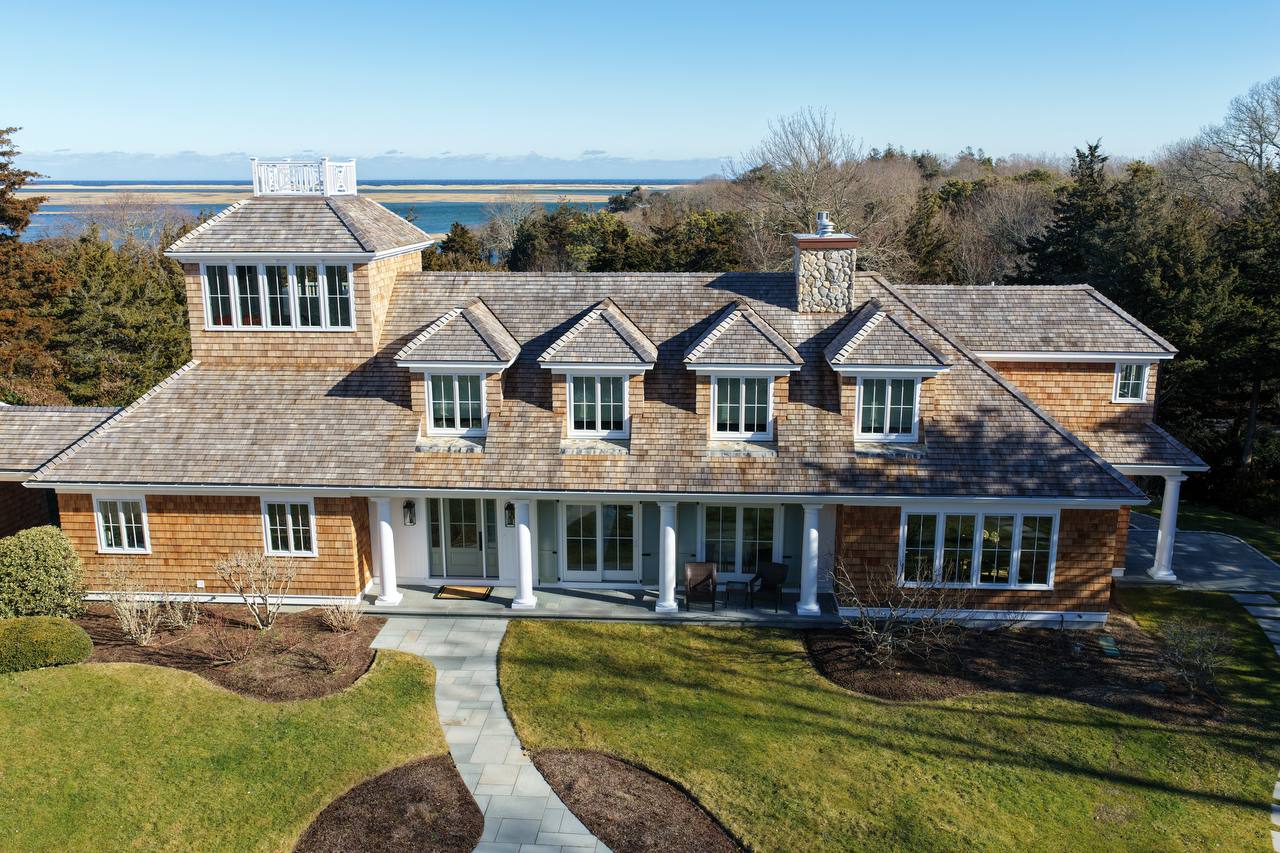
For most homeowners, the answer comes down to priorities rather than a universal ranking.
PVC is a strong choice for low maintenance. Fiber cement is a good option when durability and a wood-like appearance are important. Cedar provides natural character and works particularly well with traditional coastal architecture. Wood remains appropriate for homeowners who value authenticity and are prepared for greater maintenance.

The best siding for a Cape Cod or South Shore home is the material that fits the architecture, coastal exposure, maintenance expectations, and long-term budget of that particular property.
Do not choose based on appearance alone.
And do not choose based on price alone.
Look at the complete system: material, installation, flashing, moisture management, preparation, maintenance, and expected lifespan.
If you are comparing siding materials for your Cape Cod or South Shore home, see ANPoint Exteriors' siding installation and replacement services.