
How Long Does Siding Last? Lifespans of Wood, Cedar, PVC & Fiber Cement
Siding does not have one fixed expiration date.
A homeowner may hear that a particular material lasts 30, 40, or even 50 years and assume that the exterior will need to be replaced exactly at that point. In reality, siding lifespan depends on much more than the material itself.
Installation quality, moisture exposure, coastal weather, maintenance, ventilation, drainage, and the condition of the underlying wall can all affect how long siding remains in good condition.
For a Cape Cod or South Shore home, these factors are particularly important because exterior walls may be exposed to salt air, driving rain, strong winds, humidity, freezing temperatures, and repeated seasonal changes.
As a general planning guide:
- PVC siding: 30–50+ years
- Fiber cement siding: 30–50 years
- Cedar siding: 20–40+ years
- Wood siding: 15–30 years
These are typical ranges, not guarantees.
A well-maintained wood exterior can remain attractive for decades, while siding with poor installation or unresolved moisture problems can deteriorate much sooner.
The more useful question is not simply "How many years does siding last?"
It is "What determines whether my siding will still perform well 10, 20, or 30 years from now?"
How Long Does Siding Typically Last?
Different materials have different expected service lives.
| Siding Material | Typical Lifespan | Maintenance | General Character |
|---|---|---|---|
| PVC | 30–50+ years | Low | Practical, low-maintenance |
| Fiber Cement | 30–50 years | Low to moderate | Durable, wood-like appearance |
| Cedar | 20–40+ years | Moderate to high | Natural, premium appearance |
| Wood | 15–30 years | High | Traditional, authentic |
These ranges are useful for comparing materials, but they should not be interpreted as guarantees.
For example, two cedar homes may have very different siding lifespans because one is heavily exposed to coastal weather and the other is protected from wind and rain.
Similarly, the same type of siding can perform very differently depending on how well the wall was prepared and how water is managed around windows, doors, corners, and roof intersections.
PVC Siding Lifespan: 30–50+ Years
PVC siding is often selected by homeowners who want a relatively low-maintenance exterior.
A typical planning lifespan is approximately 30–50+ years, although actual performance depends on the product, installation, exposure, and maintenance.
One of the main advantages of PVC is that it does not require the same regular painting and refinishing as natural wood.
It is also resistant to moisture and rot, making it a practical option for homes where reducing exterior maintenance is important.
What Can Affect PVC Lifespan?
Factors include:
- installation quality;
- exposure to extreme weather;
- physical damage;
- improper fastening;
- moisture management;
- product quality;
- maintenance and cleaning.
If you are looking to reduce upkeep, PVC siding installation can be a particularly practical choice for homeowners who want to spend less time maintaining their exterior.
Fiber Cement Lifespan: 30–50 Years
Fiber cement siding typically has an expected lifespan of approximately 30–50 years.
It is often chosen because it combines a wood-like appearance with a relatively low-maintenance exterior.
Fiber cement can also provide fire resistance and strong performance in demanding weather conditions.
But its durability still depends on installation.
Joints, edges, fasteners, flashing, and moisture management all need to be handled according to the requirements of the specific product.
What Can Shorten Fiber Cement Lifespan?
Problems can develop when:
- siding is improperly installed;
- moisture is allowed to enter behind the system;
- joints are not properly detailed;
- damaged areas are left unrepaired;
- the exterior is exposed to repeated water intrusion.
A durable material cannot compensate for an improperly constructed wall system, which is why professional fiber cement siding installation is so critical for long-term performance.
Cedar Siding Lifespan: 20–40+ Years

Cedar siding can last approximately 20–40+ years, depending heavily on exposure and maintenance.
Cedar is popular on Cape Cod because its natural appearance works particularly well with traditional coastal architecture.
It can age beautifully when it is properly maintained.
However, natural wood requires more attention than low-maintenance materials.
Homeowners may need to monitor:
- moisture;
- finish deterioration;
- staining;
- cracking;
- damaged boards;
- areas where water repeatedly contacts the siding.
Regular inspection can help identify problems before they become widespread, ensuring your cedar siding remains beautiful and protected for decades.
Wood Siding Lifespan: 15–30 Years
Traditional wood siding typically has a planning lifespan of approximately 15–30 years, although properly maintained wood can remain in service longer.
The major difference between wood and low-maintenance materials is not necessarily that wood "fails" quickly.
It is that wood requires more active maintenance throughout its life.
Paint and protective finishes deteriorate over time. Moisture can affect exposed or damaged areas. Individual boards may need to be repaired or replaced.
For a traditional or historic Cape Cod home, this additional maintenance can be an acceptable tradeoff because natural wood siding is often an important part of the property's authentic character.
What Actually Determines How Long Siding Lasts?
The material is only one part of the equation.
Several other factors can have an equally important effect on the useful life of the exterior.
1. Installation Quality
Poor installation can shorten the life of even an otherwise durable material.
Common installation details that matter include:
- correct fastening;
- proper spacing;
- appropriate joints;
- flashing;
- corner details;
- window and door transitions;
- roof-to-wall transitions;
- moisture management.
Siding is part of the exterior wall system.
It should work together with the layers behind it rather than being treated as a waterproof barrier by itself.
2. Moisture Management
Water is one of the biggest threats to the long-term condition of a siding system.
The important question is not whether rain touches the siding. It is whether water can drain away properly instead of becoming trapped behind the exterior.
Potential problem areas include:
- windows;
- doors;
- roof intersections;
- wall penetrations;
- corners;
- lower sections of walls;
- damaged joints;
- areas with deteriorated flashing.
If moisture repeatedly enters the wall assembly, the siding may not be the only thing affected.
The substrate and framing can also deteriorate.
3. Coastal Exposure
Cape Cod and South Shore homes can experience significant coastal exposure.
A property close to the ocean may face:
- salt-laden air;
- strong winds;
- driving rain;
- high humidity;
- rapid weather changes.
Not every home experiences these conditions to the same degree.
A protected property surrounded by mature trees can have a very different exposure profile from a house directly facing the water.
This is why siding lifespan should always be considered in the context of the property.
4. Maintenance
Maintenance does not make a poor siding system good, but it can help a properly installed exterior remain in good condition longer.
Maintenance may include:
- cleaning;
- repainting;
- staining;
- replacing damaged boards;
- checking joints;
- inspecting trim;
- addressing moisture problems.
The amount of maintenance depends heavily on the material.
PVC generally requires less routine maintenance than cedar or traditional wood.
5. Sun Exposure
Direct sunlight can affect exterior finishes over time.
The impact depends on:
- orientation of the house;
- color;
- material;
- finish;
- exposure;
- local climate.
South- and west-facing elevations may experience different conditions from shaded elevations.
This can result in different rates of fading or finish deterioration on different sides of the same house.
6. Physical Damage
Siding can also be damaged by events that have little to do with its normal lifespan.
Examples include:
- falling branches;
- storm damage;
- impact;
- lawn equipment;
- animals;
- construction work.
A localized impact does not necessarily mean the entire exterior needs replacement.
In many cases, individual sections can be repaired.
Does Coastal Weather Shorten Siding Lifespan?
It can.
But the effect depends on the material, installation, exposure, and maintenance.
A house directly exposed to ocean weather may experience more stress than a property several miles inland.
For coastal homes, particular attention should be paid to:
- moisture;
- wind;
- salt air;
- flashing;
- fasteners;
- joints;
- drainage.
The goal is not to find a material that is completely unaffected by coastal conditions.
No exterior material works that way.
The goal is to select an appropriate siding system and install it correctly for the conditions of the property.
For a more detailed comparison, you can read our guide on what siding holds up best near the ocean.
Does Salt Air Damage Siding?
Salt air can contribute to the weathering of exterior materials and hardware over time.
However, the effect is not identical for every material or property.
A home directly exposed to ocean air may require more frequent inspection than one protected from prevailing winds.
This is another reason why maintenance and installation details matter.
For example, a homeowner should not assume that selecting a "coastal" siding material eliminates the need to inspect flashing, joints, trim, and areas where moisture can enter.
Does Proper Installation Really Make a Difference?
Yes.
Consider two identical houses with the same siding material.
One has:
- properly prepared walls;
- appropriate flashing;
- correct fastening;
- well-detailed windows and doors;
- good drainage;
- regular maintenance.
The other has:
- poor moisture management;
- incorrectly installed flashing;
- inadequate fastening;
- untreated substrate damage.
The siding material may be identical.
Its long-term performance will not necessarily be.
This is why a siding project should be evaluated as a complete exterior system rather than simply as a product purchase.
Can Siding Last Longer Than Its Typical Lifespan?
Yes.
The typical lifespan range is not a hard deadline.
A material may remain serviceable beyond the commonly quoted range if:
- it was properly installed;
- moisture has been controlled;
- the home is not excessively exposed;
- maintenance has been consistent;
- damage has been repaired promptly.
At the same time, a material may require replacement earlier if it has experienced repeated water intrusion, severe physical damage, or long-term neglect.
Age is therefore only one indicator.
Condition is more important than the number on the calendar.
How Do You Know If Old Siding Is Still Good?
Look at the actual condition of the exterior.
Signs that siding may still have useful life include:
- boards remain secure;
- no widespread cracking or warping;
- no extensive rot;
- no recurring moisture problems;
- paint or finish remains in reasonable condition;
- trim and joints are intact;
- previous repairs have been localized rather than widespread.
An older exterior can sometimes perform perfectly well if it has been maintained.
On the other hand, relatively new siding can have serious problems if moisture has entered behind it.
9 Signs Your Siding May Be Near the End of Its Life
You do not need to wait for the siding to completely fail before considering replacement.
Watch for these signs.
1. Widespread Rot
Rot affecting multiple areas is a strong indication that the exterior has significant moisture-related deterioration.
2. Repeated Repairs
If you are continually repairing different sections of the same exterior, it may be time to consider the condition of the entire system.
3. Warping or Buckling
Siding that is visibly distorted may indicate material deterioration, installation issues, or moisture problems.
4. Persistent Moisture Problems
Recurring leaks or moisture intrusion should be investigated rather than simply covered with new material.
5. Loose or Missing Sections
Siding that is pulling away from the wall may no longer be performing as intended.
6. Extensive Cracking
A few damaged boards can often be repaired.
Widespread cracking is a different situation.
7. Severe Paint or Finish Deterioration
For wood and cedar siding, widespread peeling, cracking, or finish failure can indicate that significant maintenance is overdue.
8. Deteriorated Trim
Windows, doors, corners, and other trim areas are particularly important because they can be involved in moisture entry.
9. The Exterior No Longer Matches the Home
Sometimes replacement is not primarily about damage.
A homeowner may be renovating an older exterior and want a more consistent, updated appearance.
In that situation, the decision may be aesthetic as much as functional. If you are unsure about the condition of your exterior, our guide on when to replace your siding can help you make the right call.
Can You Repair Old Siding and Extend Its Life?
Often, yes.
If the majority of the siding is in good condition and the damage is localized, repair can be a practical way to extend the useful life of the exterior.
Examples include:
- replacing damaged boards;
- repairing trim;
- addressing localized rot;
- correcting small areas of moisture damage;
- repainting or refinishing wood siding where appropriate.
The challenge can be matching older material.
A replacement board may not have the same profile, texture, color, or weathering as the original.
For that reason, professional siding repair is often easiest and most effective when suitable replacement material is readily available.
Repair vs. Replacement: A Simple Rule
A useful way to think about the decision is:
Localized damage + otherwise healthy siding = repair may make sense.
Widespread deterioration + moisture problems + repeated repairs = replacement may make more sense.
This is not a strict rule.
The condition of the substrate and the remaining useful life of the existing siding should also be considered.
For example, spending several thousand dollars repairing an exterior that may need complete replacement in a year or two may not be the best use of the budget.
Does New Siding Last Longer Than Replacement Siding?
Not automatically.
The word "new" does not guarantee better performance.
A new siding system should be installed on a properly prepared exterior.
If the underlying wall has moisture damage and that issue is not addressed, installing new siding over the problem does not solve it.
Before replacement, it is therefore worth asking:
- What is the condition of the substrate?
- Is there evidence of moisture intrusion?
- Are the windows and doors properly detailed?
- Does the existing flashing need attention?
- Are there areas of rot?
- How will water drain behind the new siding?
These questions can be more important than choosing between two similar colors.
Which Siding Has the Longest Lifespan?
If lifespan alone is the deciding factor, PVC and fiber cement generally have the longest typical planning ranges among the materials compared here, at approximately 30–50+ years for PVC and 30–50 years for fiber cement.
But this does not automatically make them the best choice.
A homeowner who wants natural cedar may reasonably accept greater maintenance because the appearance is important.
A homeowner restoring a historic property may choose wood because architectural authenticity matters more than minimizing maintenance.
The longest theoretical lifespan is only useful if the material also fits the house and the homeowner's priorities.
Which Siding Requires the Most Maintenance?
Traditional wood and cedar generally require more maintenance than PVC and fiber cement.
A simplified comparison:
| Material | Relative Maintenance |
|---|---|
| PVC | Low |
| Fiber Cement | Low to moderate |
| Cedar | Moderate to high |
| Wood | High |
Maintenance can include cleaning, painting, staining, inspections, and localized repairs.
The actual schedule depends on the material, finish, exposure, and condition.
For a homeowner who wants the least ongoing work, maintenance requirements may be just as important as lifespan.
Does Siding Color Affect Lifespan?
Color can influence how an exterior ages, particularly in relation to sunlight and heat.
However, color should not be treated as a primary lifespan determinant.
The bigger factors are:
- material;
- installation;
- exposure;
- moisture;
- maintenance;
- product specifications.
When selecting a color for a Cape Cod home, it is therefore better to consider both aesthetics and the manufacturer's recommendations for the selected siding product.
What About Siding on Older Cape Cod Homes?
Older homes often need a more careful evaluation before replacement.
Traditional Cape Cod architecture may include:
- narrow horizontal boards;
- cedar shingles;
- clapboard;
- detailed trim;
- older windows;
- dormers;
- multiple rooflines.
Replacing the siding is therefore not simply a matter of choosing a modern product.
The new exterior needs to work with the proportions and character of the house.
In some cases, repairing and preserving existing material may be preferable.
In others, a complete replacement can make sense if the existing siding has reached the end of its useful life.
How Long Should You Expect a New Siding Project to Last?
The installation itself is usually much faster than the lifespan of the material.
A typical residential siding installation or replacement may take approximately 5–10 days, depending on the size and complexity of the home.
The project can take longer if there is:
- extensive old siding removal;
- substrate damage;
- complicated architecture;
- difficult access;
- multiple stories;
- significant trim work;
- weather delays.
Siding installation should not be rushed simply to meet a calendar target.
Preparation is part of the project.
How Can You Make Siding Last Longer?
You cannot control every factor, but several practical steps can help.
Inspect the Exterior Regularly
Look for cracks, loose sections, rot, damaged trim, and signs of moisture.
Address Small Problems Early
A damaged board is easier to deal with before water reaches the wall behind it.
Keep Gutters and Downspouts Working
Poor drainage can repeatedly expose siding and lower wall sections to water.
Maintain Wood and Cedar
Paint, stain, and other finishes should be maintained according to the material and manufacturer's recommendations.
Do Not Ignore Leaks
If water is getting behind the siding, find the source rather than simply repairing the visible surface.
Follow Cleaning Recommendations
Aggressive cleaning methods can damage some materials or force water into joints.
Check Around Windows and Doors
These are common transition points and deserve particular attention during inspections.
Is It Better to Replace Siding Before It Fails?
Not necessarily.
There is a difference between planned replacement and waiting until an exterior is severely deteriorated.
If the siding is approaching the end of its useful life and you are already seeing multiple warning signs, planning replacement before major damage occurs can make the project more predictable.
But if the siding is old yet still in good condition, there may be no reason to replace it simply because it has reached a certain age.
The condition of the exterior should drive the decision.
Siding Lifespan vs. Total Cost
When comparing materials, think beyond the first installation price.
For example:
Material A
- lower initial cost;
- higher maintenance;
- more frequent refinishing.
Material B
- higher initial cost;
- lower maintenance;
- longer expected service life.
Material B may cost more at the beginning but require less ongoing investment.
That does not automatically make it the better choice.
The right comparison depends on how long you plan to own the home and how much maintenance you are willing to handle.
For a broader look at installation pricing, you can explore our detailed guide on how much siding costs in Cape Cod.
What Is the Best Long-Term Siding for a Cape Cod Home?
There is no universal answer.
If low maintenance and long service life are priorities, PVC and fiber cement are worth serious consideration.
If natural appearance and traditional character are more important, cedar and wood may be better choices.
If the house has a classic New England profile, clapboard can preserve the architectural character while allowing different material options.
The best long-term decision is therefore the one that balances:
Lifespan + maintenance + coastal exposure + appearance + installation quality + total cost.
Final Takeaway
So, how long does siding last?
As a general planning guide:
- PVC: 30–50+ years
- Fiber cement: 30–50 years
- Cedar: 20–40+ years
- Wood: 15–30 years
But these numbers only tell part of the story.
The condition of the siding and the quality of the installation matter more than age alone.
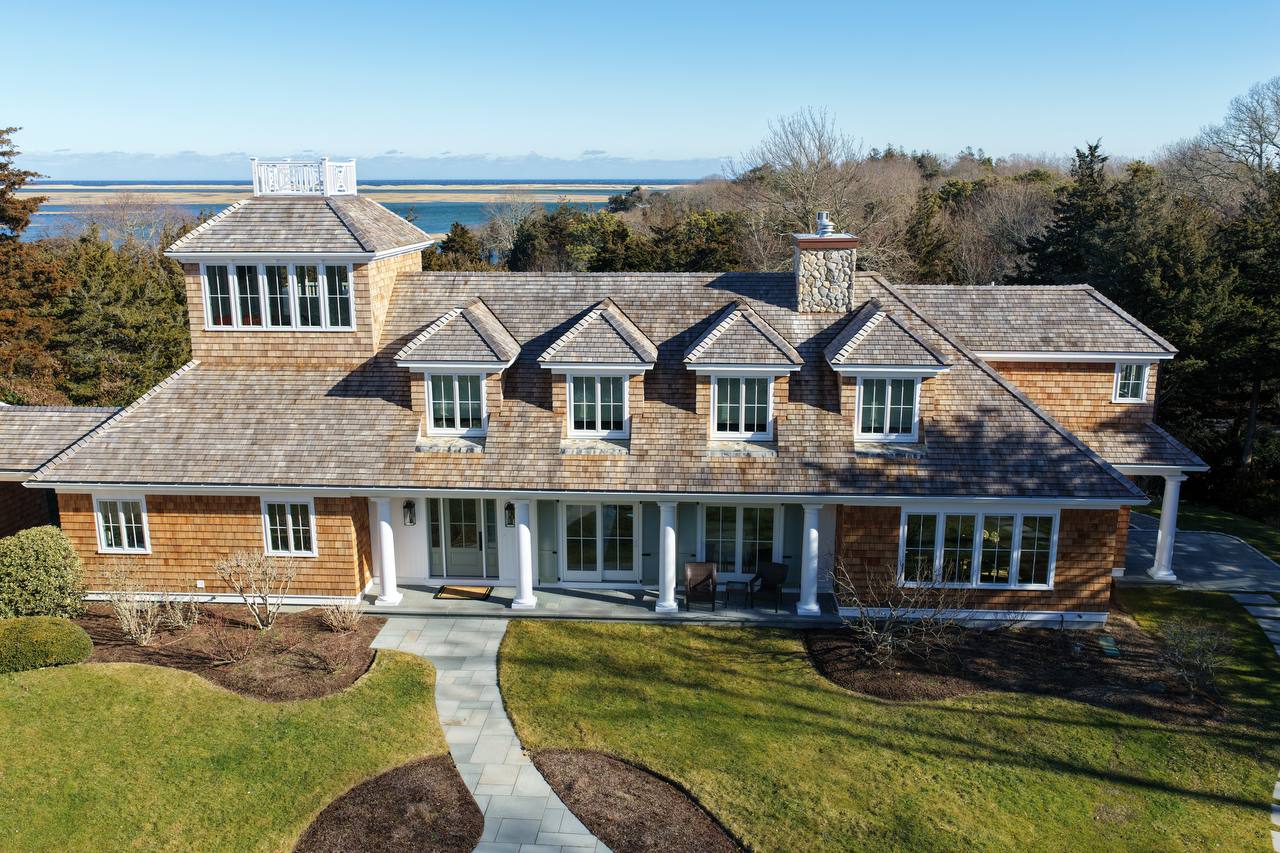
A properly installed and maintained exterior can perform well beyond a typical lifespan estimate, while moisture problems, poor installation, or neglected maintenance can shorten the useful life of almost any material.
For a Cape Cod or South Shore home, evaluate the siding as a complete exterior system. Consider coastal exposure, water management, flashing, substrate condition, maintenance, and the architectural character of the house before choosing a replacement material.
If your current siding is showing signs of deterioration, the first step is not necessarily full replacement. Determine whether the problem is localized and repairable or whether the exterior has reached the point where replacement makes more sense.

For homeowners considering new siding, see ANPoint Exteriors' siding installation and replacement services.