
Cedar vs. Fiber Cement Siding: Which Is Better for a Coastal Home?
When choosing siding for a coastal home, the decision often comes down to two very different materials: natural cedar and fiber cement.
Both can work well on homes in Cape Cod and the South Shore, but they offer different advantages. Cedar provides natural texture, warmth, and traditional New England character. Fiber cement offers a more uniform exterior with lower routine maintenance and strong resistance to weather.
So which one is better?
For homeowners who prioritize natural appearance and traditional architecture, cedar can be an excellent choice. Fiber cement is often more practical for those who want a durable exterior with less ongoing maintenance. Neither material is automatically better for every home.
The right choice depends on the home's architecture, exposure to coastal weather, desired appearance, maintenance expectations, and overall project budget.
Cedar vs. Fiber Cement at a Glance
Before looking at the details, here is a quick comparison:
| Factor | Cedar Siding | Fiber Cement Siding |
|---|---|---|
| Typical cost | From $20/sq. ft. | From $18/sq. ft. |
| Typical lifespan | 20–40+ years | 30–50 years |
| Maintenance | Medium to high | Low to medium |
| Appearance | Natural wood texture | Wood-like, consistent finish |
| Moisture management | Requires regular maintenance | Highly resistant to moisture when properly installed |
| Coastal suitability | Very good with proper maintenance | Very good |
| Best for | Traditional and premium coastal homes | Durability and lower maintenance |
| Architectural character | Natural and traditional | Versatile and clean |
These are general planning figures rather than guarantees. Actual lifespan and project cost depend on installation, exposure, preparation, maintenance, home size, and other project conditions.
Cedar Siding: Natural Coastal Character
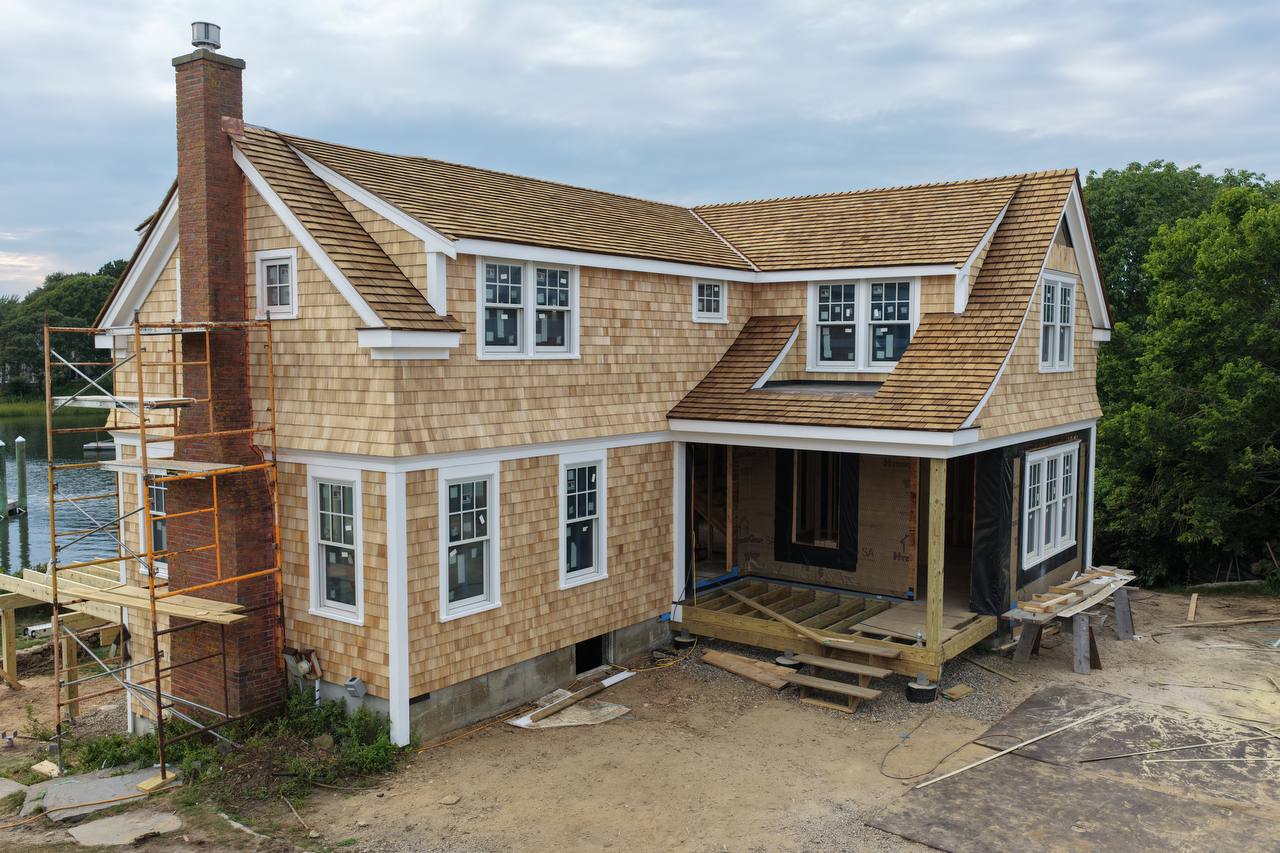
Cedar has a long history in New England architecture for a reason. It has a natural texture and variation that manufactured materials cannot completely reproduce.
The grain, color, and aging characteristics give cedar siding a distinctive appearance that works particularly well with traditional Cape Cod homes, cottages, shingle-style architecture, and higher-end coastal properties.
One of cedar's biggest advantages is also the reason homeowners choose it in the first place: it looks like real wood because it is real wood.
Depending on the desired finish, cedar can be painted, stained, or allowed to develop a weathered appearance.
But natural wood also requires more attention.
Cedar Requires Maintenance
Cedar siding needs to be kept properly protected from moisture and weather exposure. Depending on the finish and exposure, this can include periodic cleaning, staining, painting, and inspection.
Areas around windows, doors, corners, rooflines, and lower wall sections deserve particular attention because these are places where moisture can become a recurring issue.
On a coastal property, regular maintenance becomes even more important.
Salt air does not mean cedar is a poor choice. It means the material should be installed correctly and maintained according to its exposure.
For homeowners interested in the natural look of cedar, see our cedar siding options.
Fiber Cement: Durability With Less Routine Maintenance
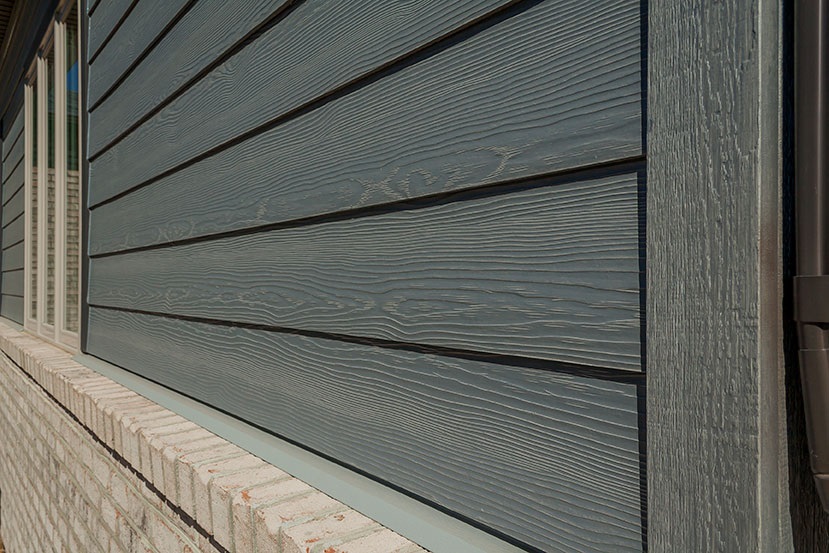
Fiber cement takes a different approach.
Instead of natural wood, it is an engineered siding material designed to provide a durable exterior with the appearance of traditional siding profiles.
It can work particularly well when homeowners want the look of painted wood without taking on the same level of routine maintenance associated with natural wood.
Fiber cement is also available in different profiles and finishes, making it suitable for both traditional and more contemporary exterior designs.
Fiber Cement and Moisture
One of the reasons fiber cement is frequently considered for coastal homes is its resistance to moisture-related deterioration when it is properly installed and maintained.
However, the material itself is only one part of the exterior system.
Proper flashing, joints, clearances, drainage, and installation details are critical. Even a durable siding material can develop problems if water is allowed to enter behind it.
For more information, see our fiber cement siding options.
Which Looks Better on a Cape Cod Home?
This is largely a matter of architectural style and personal preference.
Cedar has an advantage when the goal is a genuinely natural appearance. Its grain, texture, and subtle variation can complement older homes and traditional coastal architecture.
Fiber cement can reproduce the appearance of painted wood siding very effectively while providing a more consistent finish.
For example:
Choose cedar if you want:
- Natural wood texture
- Traditional New England character
- A premium, organic appearance
- A material that develops its own visual character over time
Consider fiber cement if you want:
- A clean, consistent appearance
- Traditional wood-style profiles
- Less routine maintenance
- A durable exterior for long-term use
Neither choice is inherently more attractive. The better option depends on what fits the architecture of the house.
Which Is Better Near the Ocean?
There is no simple rule that one material is always better for every coastal property.
A home directly exposed to ocean winds and salt air has different requirements from a property located farther inland.
For both cedar and fiber cement, several factors matter:
- Quality of installation
- Moisture management
- Flashing around openings
- Proper clearances
- Exposure to wind and driving rain
- Sun exposure
- Maintenance
- Condition of the substrate
Cedar can perform well in coastal environments when it is properly installed and maintained.
Fiber cement can also be a strong choice for coastal homes because of its durability and relatively low maintenance requirements.
The important distinction is that material selection and installation quality work together. Choosing a durable product does not compensate for poor moisture management.
For a more detailed comparison, read our guide on what siding holds up best near the ocean.
Cedar vs. Fiber Cement: Maintenance
Maintenance is one of the biggest differences between these materials.
Cedar is a natural material, so its appearance and performance depend more heavily on ongoing maintenance. The finish needs to be monitored, and exposed areas may require attention sooner than protected sections.
Fiber cement generally requires less routine maintenance, although it is not maintenance-free.
Both materials should be periodically inspected for:
- Cracks
- Damaged boards
- Loose sections
- Failed caulking
- Paint deterioration
- Moisture intrusion
- Damage around windows and doors
The difference is that cedar generally demands more active care to preserve its appearance and protect the wood.
For a homeowner who enjoys maintaining a natural wood exterior, this may not be a disadvantage.
For someone who wants to minimize exterior maintenance, fiber cement may be the more practical choice.
Which Lasts Longer?
Typical lifespan estimates are:
- Cedar siding: approximately 20–40+ years
- Fiber cement siding: approximately 30–50 years
These numbers should be viewed as general ranges rather than guarantees.
Installation quality, moisture exposure, maintenance, weather, and the condition of the wall assembly can significantly affect how long siding remains in good condition.
For example, well-maintained cedar on a properly detailed home can remain attractive and functional for decades. Conversely, fiber cement installed incorrectly can develop problems despite the durability of the material itself.
You can compare these figures with other common siding materials in our guide to how long siding lasts.
Which Costs More?
Based on typical starting prices, cedar is generally more expensive than fiber cement.
Current planning figures for ANPoint's siding options start around:
- Fiber cement: from $18/sq. ft.
- Cedar: from $20/sq. ft.
But the material price is only part of the total project cost.
The final price can also depend on:
- Size of the home
- Number of stories
- Existing siding removal
- Condition of the substrate
- Windows and doors
- Corners and architectural details
- Dormers and gables
- Accessibility
- Preparation requirements
- Project complexity
For example, two homes with the same wall area can have very different installation costs if one has a simple exterior and the other has multiple dormers, rooflines, windows, and detailed trim.
For a broader explanation of siding pricing, read our guide on how much siding costs in Cape Cod.
What About Repairs?
Another important consideration is the condition of the existing siding.
If only a small section of cedar is damaged and the surrounding material is sound, replacement of individual boards may make more sense than replacing the entire exterior.
The same principle applies to other siding materials.
But when damage is widespread, moisture is present in multiple areas, or repairs keep recurring, a complete replacement may be more practical.
The decision should be based on the condition of the entire exterior rather than one damaged section.
See our siding repair service if the problem appears localized, or explore our full siding installation and replacement options when the exterior requires a larger upgrade.
Cedar or Fiber Cement for an Older Cape Cod Home?
Older homes require a slightly different approach.
The goal is not always to choose the material with the longest advertised lifespan. The siding should also work with the proportions, details, and character of the existing architecture.
Cedar can be particularly appropriate when preserving a traditional appearance is a priority.
Fiber cement can also work well on older homes, particularly when the appropriate profile, dimensions, trim, and finish are selected.
The important point is to avoid treating the siding material as an isolated decision. Windows, trim, corner boards, rooflines, shutters, doors, and other exterior details all contribute to the final appearance.
What Should You Choose?
A simple way to approach the decision is to start with your priorities.
Choose Cedar When Natural Appearance Comes First
Cedar is worth considering if you want:
- Authentic wood character
- Traditional coastal aesthetics
- Natural texture and variation
- A premium exterior appearance
- A material that fits historic or traditional architecture
Be prepared for more regular maintenance and the need to protect the wood from moisture and weather exposure.
Choose Fiber Cement When Lower Maintenance Comes First
Fiber cement may be a better fit if you want:
- A durable exterior
- Less routine maintenance than natural wood
- A consistent painted finish
- Wood-like appearance
- Good performance in demanding weather conditions
It is particularly attractive to homeowners who want traditional siding aesthetics without as much ongoing maintenance.
There Is No Single "Best" Siding Material
The cedar-versus-fiber-cement decision is ultimately about priorities.
Cedar is the stronger choice when natural beauty, traditional character, and authentic wood are most important. Fiber cement is often the stronger choice when durability, consistency, and lower maintenance are higher priorities.
For homes in Cape Cod and the South Shore, the decision should also account for the property's exposure, existing architecture, moisture conditions, and how much maintenance the homeowner is comfortable with.
A good siding choice is not simply the material with the longest lifespan or the lowest starting price. It is the material that fits the house and can be properly installed and maintained for the conditions it will face.
If you're comparing siding options for your home, you can review our full siding installation and replacement services to compare materials based on your home's architecture, exposure, and long-term maintenance expectations.