
Can You Repair Siding or Should You Replace It? How to Decide
A few damaged siding boards do not necessarily mean you need to replace your entire siding.
In many cases, localized siding damage can be repaired without replacing all of the siding. But when damage is widespread, moisture has reached the underlying structure, or the same problems keep returning, full replacement may make more sense.
The difficult part is knowing where that line is.
A cracked board, faded finish, or small area of rot can usually be evaluated on its own. The bigger question is whether the surrounding siding is still in good enough condition to make a repair worthwhile.
For homes in Cape Cod and the South Shore, this decision also needs to account for coastal exposure, moisture, driving rain, wind, and the age and condition of the existing exterior.
When Is Siding Repair Usually Enough?
Repair is often the better option when the damage is limited, localized, and surrounded by otherwise healthy siding.
For example, replacing a few damaged boards may make sense when:
- The majority of the siding is in good condition
- Damage is limited to one or two areas
- There is no evidence of widespread moisture
- The underlying wall remains sound
- The existing siding can be matched reasonably well
- The problem has a clear and limited cause
A localized repair can restore the affected area without the cost and disruption of a complete replacement.
This can be particularly useful for wood and cedar siding, where individual boards can sometimes be replaced while preserving the existing exterior.
See our siding repair services for situations where the damage is limited to specific areas.
When Does Repair Stop Making Sense?
The situation changes when repairs become a recurring part of maintaining the exterior.
Imagine replacing several boards this year, repairing another section next year, and then discovering additional rot around the windows or lower walls.
At some point, the issue is no longer one damaged section. The condition of the entire siding system needs to be considered.
Full replacement may be more appropriate when:
- Damage is present across multiple elevations
- Rot keeps returning
- Moisture problems are widespread
- Large sections are warped or deteriorated
- The siding is approaching the end of its expected lifespan
- Matching replacement material is difficult to find
- Previous repairs have not resolved the underlying problem
- A large percentage of the exterior requires attention
The goal is not to replace siding unnecessarily. It is to avoid putting money into repeated repairs when the existing exterior is already reaching the end of its useful life.
The Extent of Damage Matters More Than One Bad Section
One of the most common mistakes is judging the entire exterior by its worst-looking area.
A house may have one badly damaged section while the rest of the siding remains in excellent condition.
The opposite can also happen.
A home may look reasonably good from the street while having deterioration in less visible locations around windows, doors, corners, rooflines, or lower wall sections.
That is why the condition of the whole exterior matters.
A useful evaluation should consider:
- How much siding is damaged?
- Where is the damage located?
- What caused it?
- Is moisture involved?
- Is the surrounding siding still healthy?
- How old is the existing material?
- How often has it already been repaired?
These questions provide much more useful information than simply asking whether the siding "looks old."
Moisture Changes the Equation
Moisture is one of the biggest reasons a small siding problem can become a larger exterior issue.
For example, a soft or rotten board around a window may be the visible symptom of water getting behind the siding.
Replacing the board without addressing the source of the moisture may only postpone the problem.
Look carefully at:
- Windows
- Doors
- Corners
- Roof-to-wall transitions
- Lower sections of walls
- Siding joints
- Areas around penetrations
- Previous repair locations
If the same area repeatedly deteriorates, it is important to determine why.
A durable new board will not solve a flashing or drainage problem.
What If the Siding Is Old but Still Looks Good?
Age alone does not automatically mean siding needs to be replaced.
Typical lifespan ranges vary by material:
| Material | Typical Lifespan |
|---|---|
| PVC | 30–50+ years |
| Fiber cement | 30–50 years |
| Cedar | 20–40+ years |
| Wood | 15–30 years |
These are general ranges, not fixed expiration dates.
A well-maintained exterior can perform beyond the typical range, while poorly maintained siding can deteriorate much earlier.
If older siding is still structurally sound, free from widespread moisture damage, and performing well, replacement may not be necessary simply because it has reached a certain age.
For a more detailed look at material longevity, see our guide on how long siding lasts.
What If the Siding Looks Bad but Is Structurally Sound?
This is a different situation.
Fading, outdated color, or cosmetic imperfections do not necessarily mean the siding has failed.
A homeowner may simply want to change the appearance of the house.
In that case, the decision depends on the material and its condition.
Some siding can be cleaned, repainted, or refinished. Other materials may be difficult or impractical to restore once they have significantly deteriorated.
The important distinction is between cosmetic condition and functional condition.
If the siding looks dated but continues to protect the home properly, replacement is primarily an aesthetic and renovation decision.
If the siding is allowing moisture intrusion or has widespread deterioration, the decision becomes more functional.
Does Replacing a Few Boards Save Money?
Usually, yes, if the damage is genuinely localized.
A targeted repair avoids the material, labor, removal, and preparation associated with replacing the entire exterior.
But the lowest immediate cost is not always the lowest long-term cost.
For example, if a homeowner spends money on several repairs over a few years and the siding still needs complete replacement afterward, the cumulative cost can become significant.
This is why it is useful to look at repair frequency, not just the price of the next repair.
A $500 repair may be reasonable.
Five similar repairs over several years may tell you something different about the condition of the exterior.
What About Matching Old Siding?
Matching can become an important issue with older homes.
Over time, siding profiles, colors, finishes, and manufacturers can change.
Even when replacement material looks similar at first, differences in age, fading, texture, or exposure can make a repaired section visible.
This is particularly noticeable when the damaged section is in the middle of a large wall.
For some homes, a well-matched repair is barely noticeable.
For others, finding an acceptable match may be difficult enough that replacement of a larger section becomes the more practical option.
Repair vs. Replacement by Material
Different materials also respond differently to damage.
Cedar

Cedar can often be repaired by replacing individual damaged boards or sections when the surrounding material remains healthy.
However, widespread rot, repeated moisture damage, or extensive deterioration can make replacement more practical.
Learn more about our cedar siding options.
Wood
Traditional wood siding can also be repaired section by section.
This can be especially useful for older or historic homes where preserving existing architectural details matters.
But wood requires regular maintenance, and widespread deterioration may eventually make complete replacement more sensible.
Explore our wood siding services.
PVC
PVC siding can sometimes be repaired by replacing individual damaged panels.
The main consideration is whether a matching panel is available and whether the surrounding siding remains in good condition.
See our PVC siding installation guide for more information.
Fiber Cement
Individual damaged boards can sometimes be replaced, depending on the installation and the extent of the problem.
If deterioration is widespread, a larger replacement may be appropriate.
Discover our fiber cement siding options.
What If Only One Side of the House Is Damaged?
You do not always need to replace all four sides of a house.
If one elevation has significantly greater exposure to wind, rain, or sunlight, it may deteriorate faster than more protected sides.
A partial replacement can sometimes be considered when:
- Damage is concentrated on one elevation
- The remaining siding is in good condition
- A suitable material match is available
- The new section can be integrated into the existing exterior
However, a partial replacement should still be evaluated in terms of appearance and long-term consistency.
If the existing siding is already old, installing new material on one wall may make the difference between old and new sections more obvious.
Coastal Exposure Can Accelerate Problems
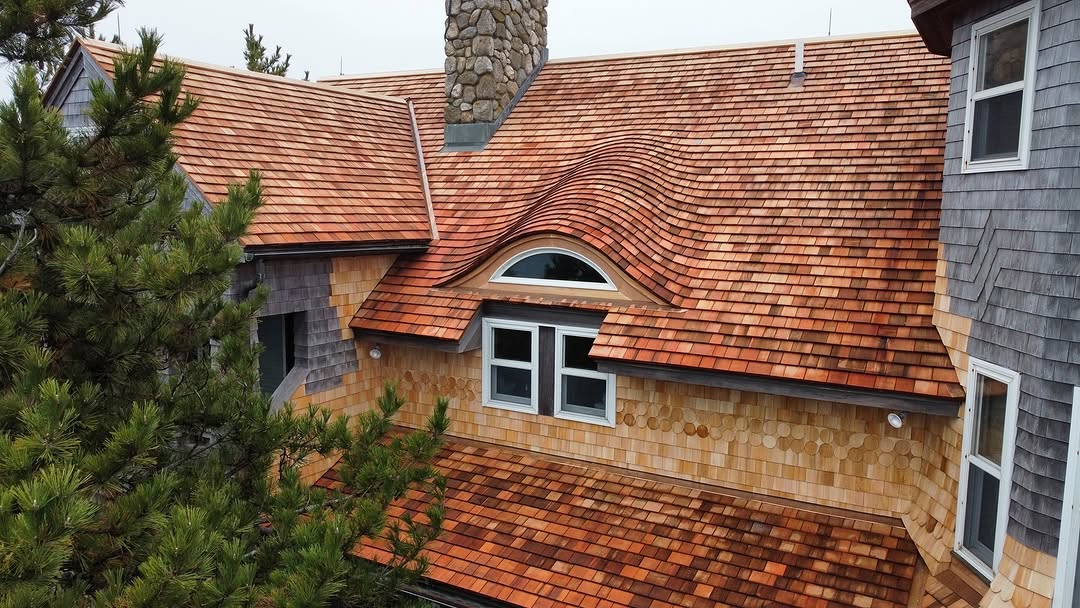
Homes in Cape Cod and the South Shore can experience significant exposure to moisture, wind, salt air, and driving rain.
The effect is not identical for every property.
A house directly exposed to ocean weather may experience more demanding conditions than one located farther inland or protected by surrounding buildings and vegetation.
When evaluating whether to repair or replace siding, consider the exposure of the actual property.
If the same wall repeatedly develops problems because of its exposure, simply replacing damaged boards may not address the bigger issue.
The replacement material and installation details should be selected with those conditions in mind.
For a deeper look at material performance, see our guide on what siding holds up best near the ocean.
How Much Does Replacement Cost Compared With Repair?
There is no universal repair-to-replacement ratio because projects vary considerably.
For a complete siding project, a general planning range is about $10–$20 per square foot, depending on material and project conditions.
The final price can be affected by:
- Home size
- Siding material
- Existing siding removal
- Condition of the substrate
- Number of stories
- Windows and doors
- Dormers and gables
- Trim
- Accessibility
- Preparation requirements
For a detailed explanation, see our guide on how much siding costs in Cape Cod.
A repair should be evaluated differently. Its cost depends on how much material needs to be replaced, how accessible the area is, whether the underlying surface is damaged, and whether matching material is available.
A Simple Way to Make the Decision
If you are unsure what to do, start with these five questions:
1. Is the damage localized?
If yes, repair may be appropriate.
If damage appears in many different areas, look more closely at the overall condition.
2. Is there active or recurring moisture?
If yes, identify and address the source before deciding how much siding to replace.
3. Is the surrounding siding still healthy?
If most of the exterior is sound, targeted repair may make sense.
If large areas are deteriorated, replacement becomes more reasonable.
4. How old is the siding?
Age does not determine the decision by itself, but it helps put the current condition into context.
5. How often have you already repaired it?
Frequent repairs can indicate that the siding is reaching the end of its useful life.
When Replacement Is the Better Long-Term Choice
Complete siding replacement is usually easier to justify when several factors point in the same direction.
For example:
Older siding + widespread damage + recurring moisture + frequent repairs
is a very different situation from:
Newer siding + one damaged section + no moisture problem
The first scenario suggests that continuing to repair individual areas may only postpone a larger project.
The second may be an ideal situation for a straightforward repair.
This is why there is no useful rule such as "replace siding after X years." The actual condition of the exterior matters more.
When Repair Is the Better Choice
A repair can be the smarter decision when the existing siding is generally healthy and the problem is limited.
For example, replacing several damaged boards after a storm can make far more sense than replacing an otherwise good exterior.
Likewise, if only one section has been affected by a localized moisture issue and the cause can be corrected, there may be no reason to disturb the rest of the siding.
The objective should always be to solve the actual problem rather than replace material unnecessarily.
The Bottom Line

Repair siding when the damage is limited and the surrounding exterior is still in good condition. Consider full replacement when damage is widespread, moisture problems recur, repairs are becoming frequent, or the existing siding is nearing the end of its useful life.
For coastal homes, the decision should also account for exposure to salt air, humidity, wind, and driving rain.
If the exterior is generally sound, a targeted repair may be all that is needed.
If several problems are appearing at the same time, it is worth evaluating the entire siding system before continuing with individual repairs.
For homeowners considering a larger exterior update, see our siding installation and replacement services for available materials and replacement options.