
Siding for Cape Cod Homes: Materials, Costs, Lifespan & What to Choose
Choosing siding for a home on Cape Cod is not simply a matter of picking a color or deciding whether you prefer the look of wood or fiber cement. A coastal home has to deal with salt air, moisture, driving rain, strong winds, seasonal temperature changes, and, in some locations, much greater exposure to the weather than a home farther inland.
That is why the siding that looks right in a showroom is not necessarily the right choice for your house.
For most Cape Cod and South Shore homes, the decision comes down to five main factors: coastal exposure, material durability, maintenance requirements, appearance, and total project cost. The right siding should work with the architecture of the house while also being appropriate for the conditions around it.
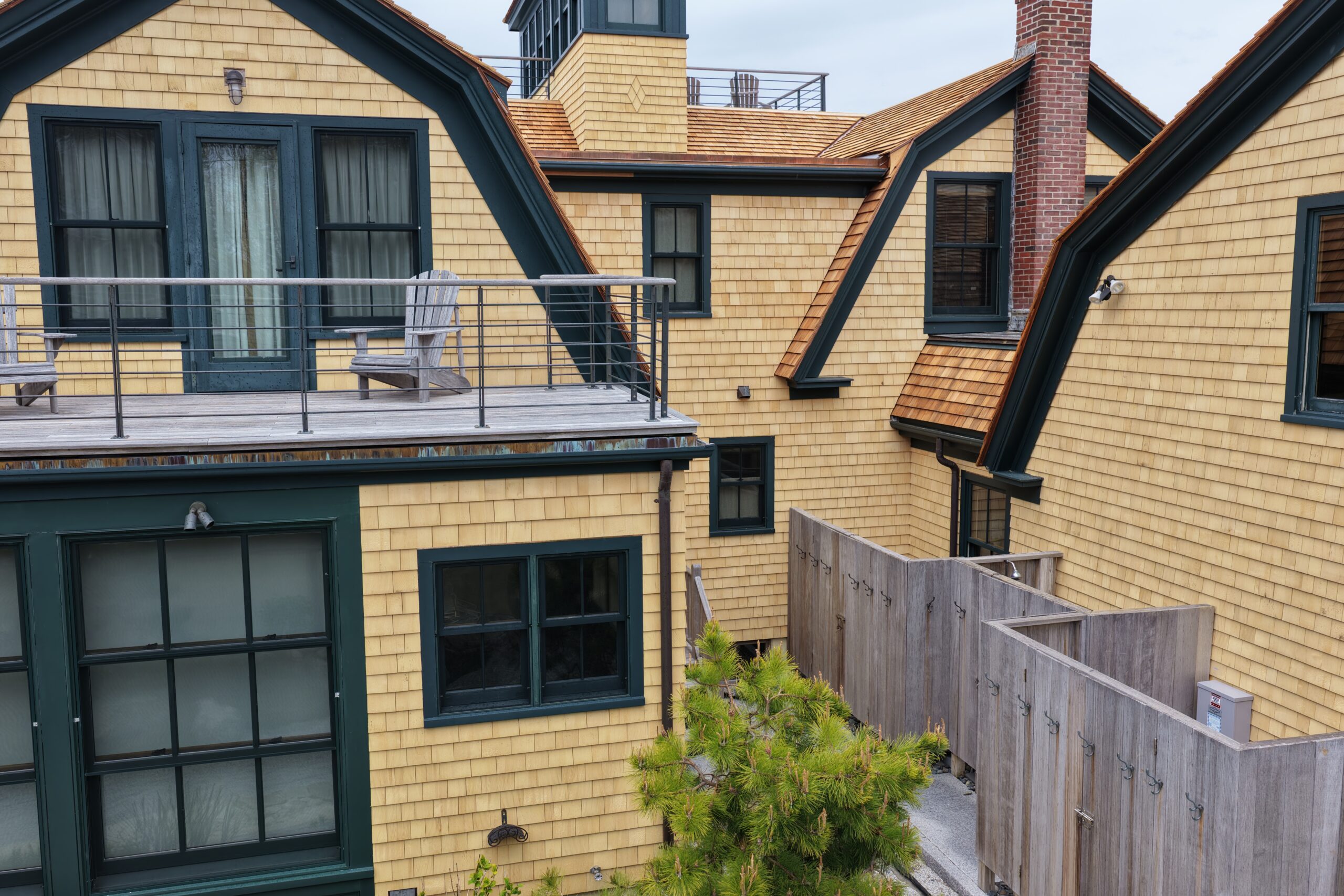
This guide compares the most common siding options for Cape Cod homes, including PVC, fiber cement, wood, cedar, and clapboard siding. It also explains typical costs, expected lifespans, installation timelines, and when repair may make more sense than replacement.
What Is the Best Siding for a Cape Cod Home?
There is no single siding material that is best for every Cape Cod home.
PVC and fiber cement are generally strong choices for homeowners who prioritize durability and lower maintenance. Cedar and other wood siding can be a better fit when preserving traditional New England character is the priority. Clapboard siding is especially appropriate for homes where a classic horizontal profile is part of the architectural design.
The right choice depends on the home's location, exposure to wind and salt air, existing exterior, architectural style, maintenance expectations, and budget.
A house directly exposed to ocean air may have very different siding requirements from a property protected by trees or located several miles inland. Likewise, a historic or traditionally styled home may benefit from a material and profile that preserves its original appearance rather than simply choosing the lowest-maintenance option.
Before comparing materials, it helps to understand what makes the Cape Cod environment different.
Why Siding Choice Matters on Cape Cod
Coastal New England puts more stress on an exterior than many homeowners realize.
Salt carried through the air can affect exterior surfaces over time. Moisture can enter small gaps or damaged areas. Driving rain tests the installation and flashing around windows, doors, and rooflines. Strong winds place additional demands on the siding system and its attachment.
There are also large seasonal changes. A Cape Cod exterior may experience hot, humid summer conditions followed by freezing temperatures, snow, and repeated wet-dry cycles during the rest of the year.
This does not mean that one material will automatically fail while another will last forever. Installation quality, substrate preparation, flashing, ventilation, drainage, and maintenance all have a major effect on how siding performs.
For that reason, comparing materials only by their advertised lifespan can be misleading.
A better question is: Which siding material gives this particular home the right balance of durability, appearance, maintenance, and long-term cost?
Siding Materials for Cape Cod Homes Compared
Here is a practical starting point for comparing the most common options.
| Material | Typical Cost | Typical Lifespan | Maintenance | Best For |
|---|---|---|---|---|
| PVC Siding | From $12/sq. ft. | 30–50+ years | Low | Low-maintenance homes and coastal properties |
| Fiber Cement | From $18/sq. ft. | 30–50 years | Low to moderate | Durability, fire resistance, wood-like appearance |
| Wood Siding | From $15/sq. ft. | 15–30 years | High | Traditional and historic-style homes |
| Cedar Siding | From $20/sq. ft. | 20–40+ years | Moderate to high | Premium coastal and traditional homes |
| Clapboard Siding | From $14/sq. ft. | 20–40 years | High when wood | Classic New England architecture |
These are starting figures rather than fixed project prices. The final cost can change substantially depending on the size of the home, the material selected, removal of existing siding, substrate condition, accessibility, trim details, and the complexity of the installation.
PVC Siding
PVC siding is often considered when homeowners want a clean exterior with relatively low maintenance.
One of its main advantages for coastal properties is its resistance to moisture and rot. It does not require the same type of ongoing maintenance associated with natural wood, making it practical for homeowners who do not want regular painting or extensive exterior upkeep.
PVC can also work well with a wide range of Cape Cod architectural styles, from traditional homes to more contemporary coastal properties.
Fiber Cement Siding
Fiber cement is frequently chosen when durability and appearance are equally important.
It can provide the look of painted wood while offering a different maintenance profile. It is also valued for its resistance to fire and its ability to handle demanding exterior conditions.
For a coastal home, the quality of the installation still matters. Fiber cement is not a substitute for proper flashing, moisture management, and preparation.
Wood Siding
Wood remains a strong choice for homeowners who want authentic natural character.
It is particularly appropriate for traditional New England homes, historic properties, and houses where preserving the original architectural appearance matters more than minimizing maintenance.
The tradeoff is straightforward: wood requires more attention over its service life. Paint, stain, moisture exposure, and the condition of individual boards all need to be monitored.
Cedar Siding
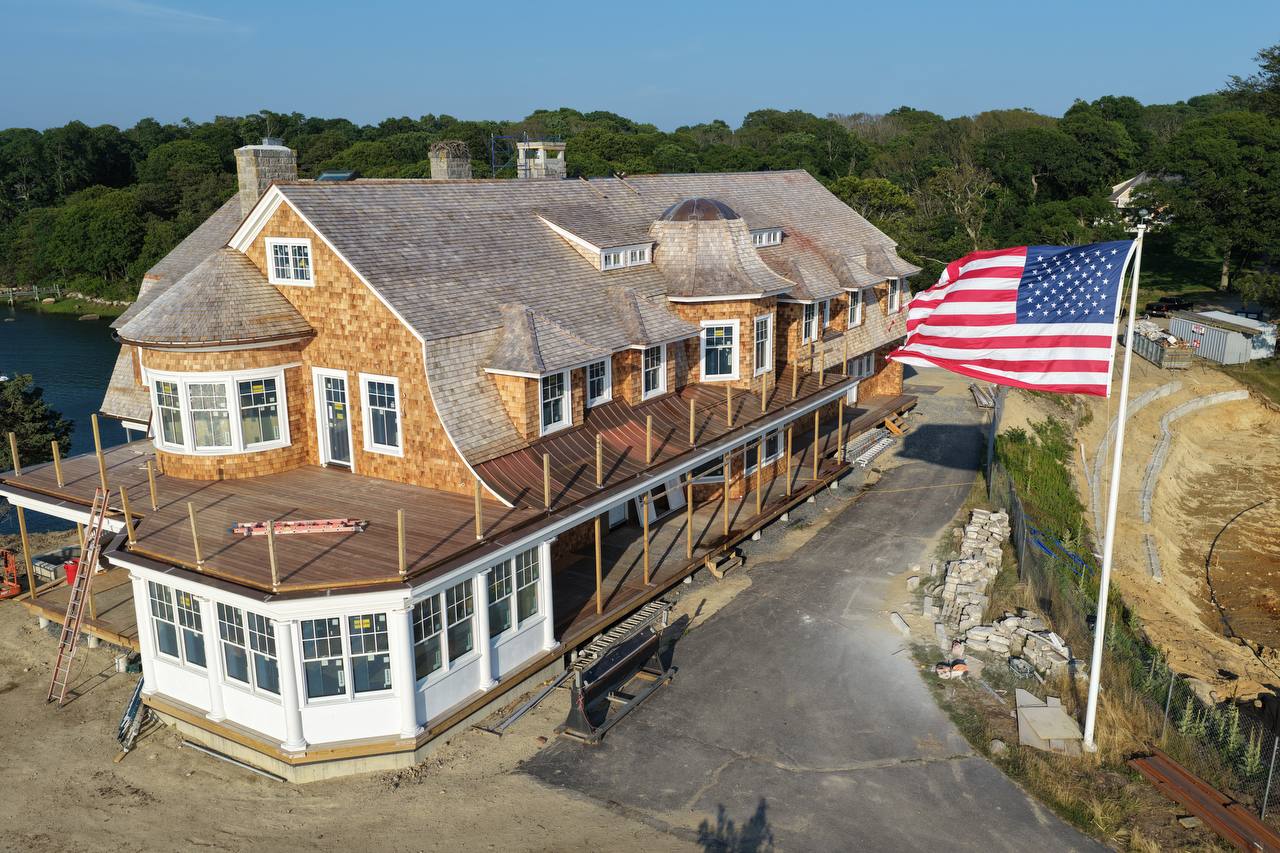
Cedar is one of the materials that naturally fits the Cape Cod aesthetic.
It provides a warm, natural appearance and can complement traditional coastal architecture exceptionally well. Cedar is often selected for homes where the exterior itself is an important part of the property's character.
However, natural cedar should not be treated as maintenance-free. Moisture management and appropriate maintenance are important to protecting the material over time.
Clapboard Siding
Clapboard is a classic New England siding profile characterized by overlapping horizontal boards.
The term describes the style or profile rather than one single material. Clapboard can be made from wood and can also be produced in other materials designed to recreate the traditional appearance.
Its popularity in the region is not accidental. The horizontal profile works naturally with traditional New England architecture and can help preserve the appearance of an older Cape Cod home.
How Much Does Siding Cost on Cape Cod?
For a typical siding project, a useful starting range is approximately $10–$20 per square foot, although some materials and more complex projects can fall outside that range.
The material itself is only part of the total cost.
Two homes with the same exterior square footage can have very different siding installation prices because of differences in preparation, access, trim, windows, rooflines, and existing siding.
The main cost factors include:
- Siding material: PVC, fiber cement, cedar, wood, and other options have different material and installation costs.
- Size of the house: More exterior wall area generally means a larger project.
- Existing siding: Removing and disposing of old siding adds labor.
- Substrate condition: Damaged sheathing or other underlying issues may need to be addressed before new siding is installed.
- Windows and doors: Each opening requires careful detailing and flashing.
- Trim and architectural details: Corners, gables, dormers, porches, and other features increase installation complexity.
- Accessibility: Multi-story homes or difficult-to-access areas can require additional equipment and labor.
- Material profile and installation method: Some siding systems require more detailed preparation and installation than others.
This is why a per-square-foot number should be treated as a planning range rather than a final quote.
A Simple Example
Suppose a house has 2,000 square feet of exterior wall area that requires siding.
At a planning range of $10–$20 per square foot:
2,000 × $10 = $20,000
2,000 × $20 = $40,000
That gives a rough project range of $20,000–$40,000 before project-specific adjustments.
The actual price could be higher or lower depending on the factors above.
For homeowners comparing quotes, the important thing is not simply which contractor has the lowest square-foot price. Look at what is included: removal, preparation, flashing, trim, disposal, installation, and any necessary substrate work.
How Long Does Siding Last?
Siding lifespan varies by material, installation quality, exposure, and maintenance.
As a general planning range:
- PVC: approximately 30–50+ years
- Fiber cement: approximately 30–50 years
- Wood: approximately 15–30 years
- Cedar: approximately 20–40+ years
- Clapboard: approximately 20–40 years, depending heavily on material and maintenance
These numbers should not be interpreted as expiration dates.
A well-maintained wood exterior can remain attractive for decades, while poorly installed siding of a theoretically long-lasting material can develop problems much sooner.
The environment also matters. A home exposed to strong coastal winds and salt air may require more frequent inspection than a protected property.
For a deeper comparison of expected service life, read how long does siding last.
When Should You Replace Siding?
Siding does not necessarily need to be replaced simply because it has reached a certain age.
The condition of the exterior is more important than the number of years since installation.
Look for signs such as:
- cracked, split, warped, or loose boards;
- recurring moisture problems;
- areas of rot or deterioration;
- siding that is pulling away from the wall;
- extensive fading or peeling;
- repeated repairs in the same areas;
- visible damage around windows and doors;
- damaged or deteriorated trim;
- evidence that moisture is getting behind the siding.
One damaged board does not automatically mean the entire exterior needs replacement. If the problem is isolated and the rest of the siding is in good condition, repair may be the more sensible solution.
However, when deterioration is widespread or the underlying installation has moisture-related problems, replacing individual sections over and over may not be the best long-term approach.
Find out when to replace your siding.
Can You Repair Siding Instead of Replacing It?
This is one of the most important decisions homeowners face.
Repair is usually worth considering when damage is localized and the existing siding is otherwise in good condition. Replacement becomes more reasonable when damage is widespread, the material has reached the end of its useful life, or there are underlying moisture and installation problems.
For example, replacing a few damaged boards after a storm is very different from dealing with years of moisture intrusion across an entire exterior wall.
Before deciding, look beyond the visible damage.
A contractor should assess:
- The condition of the siding itself.
- The condition of the substrate underneath.
- Flashing around windows and doors.
- Areas where water may enter.
- The extent of rot or deterioration.
- Whether matching replacement material is available.
- The expected remaining life of the existing siding.
Learn more about siding repair.
Which Siding Is Best Near the Ocean?
Homes close to the ocean require particular attention to moisture, wind, and salt-air exposure.
There is no universal "ocean-proof" siding material. Instead, the entire exterior system needs to be considered.
For a coastal property, homeowners should pay attention to moisture resistance, flashing, wind exposure, salt air, and maintenance requirements.
This is why "best siding for a coastal home" should be treated as a property-specific question rather than a simple ranking.
What works well for a protected home in a wooded neighborhood may not be the same solution for a house directly exposed to ocean weather.
Read more about what siding holds up best near the ocean.
Cedar vs. Fiber Cement for a Coastal Home
Cedar and fiber cement are often compared because both can provide a high-quality appearance while meeting the needs of traditional and upscale homes.
The difference is largely about priorities.
| Factor | Cedar | Fiber Cement |
|---|---|---|
| Appearance | Natural wood character | Wood-like painted appearance |
| Maintenance | Moderate to high | Low to moderate |
| Coastal use | Strong choice with proper maintenance | Strong choice with proper installation |
| Architectural style | Traditional, historic, coastal | Traditional, transitional, modern |
| Natural material | Yes | No |
| Long-term upkeep | More involved | Generally easier |
If the natural character of real wood is a major part of the design, cedar may be the better fit.
If lower maintenance and a wood-like appearance are more important, fiber cement may make more sense.
Neither should be selected solely on price.
Compare cedar vs. fiber cement siding.
How Long Does Siding Installation Take?
A typical residential siding installation or replacement project may take approximately 5–10 days, depending on the size and complexity of the home.
The timeline can change because of home size, siding material, amount of old siding being removed, substrate preparation, number of windows and doors, architectural details, weather, accessibility, and unexpected conditions discovered after the existing siding is removed.
A straightforward project on a smaller home may move faster, while a larger or more detailed Cape Cod property can take longer.
The installation process generally involves more than attaching new boards to the exterior.
What Happens During a Siding Replacement?
A professional siding project typically begins with an assessment of the existing exterior and the areas that need attention.
1. Inspection and Planning
The existing siding, trim, wall surfaces, windows, doors, and other exterior details are evaluated. The goal is to identify potential problems before installation begins.
2. Removal of Existing Siding
If replacement is required, the existing siding is removed where appropriate. This stage can reveal issues that were not visible from the outside, including damaged sheathing or moisture-related deterioration.
3. Preparation
The underlying surface needs to be properly prepared before the new siding goes on. This is one of the less visible parts of the project, but it has a major impact on the finished result.
4. Flashing and Moisture Management
Openings and transitions need appropriate detailing so that water is directed away from the wall assembly.
5. Siding Installation
The selected material is installed according to its specific requirements, including fastening, spacing, joints, corners, and other details.
6. Trim and Finishing
Corners, windows, doors, rooflines, and other architectural elements are completed so that the new exterior looks intentional rather than simply covered with new material.
7. Final Inspection and Cleanup
The finished exterior is inspected, details are addressed, and the work area is cleaned.
A good siding installation should therefore be viewed as an exterior system rather than simply a layer of decorative material.
Learn more about our siding installation services.
How Much Maintenance Does Siding Need?
Maintenance requirements differ significantly between materials.
PVC is generally chosen by homeowners who want less ongoing maintenance.
Fiber cement typically requires less maintenance than natural wood but still needs periodic inspection and care.
Wood and cedar require more attention, particularly in areas exposed to moisture and weather.
Regardless of material, homeowners should periodically inspect areas around windows and doors, corners and trim, joints and transitions, lower sections of exterior walls, areas exposed to standing water or splashback, places where paint or finish is deteriorating, and signs of cracking, warping, rot, or moisture.
Cleaning should also be approached according to the manufacturer's recommendations. Excessive pressure washing can damage some siding materials or force water into areas where it should not go.
The objective is not to make siding maintenance disappear. It is to choose a material and maintenance schedule that make sense for the homeowner.
What Siding Should You Choose for a Cape Cod Home?
A practical way to make the decision is to start with your priorities.
Choose PVC if:
- low maintenance is important;
- moisture resistance is a priority;
- you want a clean, consistent appearance;
- you prefer not to deal with regular painting.
Choose Fiber Cement if:
- you want a durable exterior;
- you like the appearance of painted wood;
- fire resistance is an important consideration;
- you want a balance between appearance and maintenance.
Choose Cedar if:
- natural wood appearance is important;
- the house has a traditional or coastal architectural style;
- you are comfortable with regular maintenance;
- preserving character is a priority.
Choose Wood if:
- you want authentic natural material;
- you are restoring a traditional or historic-style home;
- you are prepared for more frequent maintenance;
- matching an existing wood exterior is important.
Choose Clapboard if:
- you want a classic New England appearance;
- the home's architecture suits a horizontal profile;
- preserving traditional Cape Cod character is important.
The Most Important Question Is Not "Which Siding Is Best?"
It is which siding is appropriate for your particular house.
A good material choice should take several things into account at the same time: Architecture + coastal exposure + existing exterior + maintenance expectations + budget + long-term plans for the property.
For example, a homeowner renovating a traditional Cape Cod house may prioritize natural cedar or clapboard because the appearance is central to the project.
Another homeowner may have a newer coastal property and prefer PVC because reducing maintenance is more important.
Someone else may want a wood-like appearance with a different maintenance profile and choose fiber cement.
None of these decisions is automatically right or wrong.
The goal is to select a siding system that fits the house rather than forcing the house into a generic material choice.
Siding for Cape Cod and South Shore Homes

Cape Cod and South Shore properties have their own combination of architecture, weather exposure, and coastal conditions.
That means siding installation should begin with the house itself.
At ANPoint Exteriors, siding projects are approached with attention to the home's architecture, exterior condition, material selection, and local coastal environment.
Whether the project involves PVC, fiber cement, cedar, wood, or clapboard, the installation details matter just as much as the visible finish.
You can learn more about our siding installation and replacement services, including the materials we work with and the types of exterior projects we handle.
Final Takeaway
There is no single siding material that is right for every Cape Cod home.
PVC is a practical low-maintenance option. Fiber cement offers durability and a wood-like appearance. Cedar and wood provide natural character but require more maintenance. Clapboard delivers a classic New England profile and can be produced in different materials.
The best decision comes from looking at the entire exterior rather than choosing a material in isolation.
Before replacing siding, consider how exposed the home is to coastal weather, how much maintenance you are willing to handle, the architectural style of the property, the condition of the existing siding and substrate, your expected budget, and the long-term plans for the home.
And most importantly, don't evaluate siding by material cost alone. Installation quality, moisture management, preparation, flashing, and detailing can have just as much impact on the long-term performance of the exterior.
For Cape Cod and South Shore homeowners comparing siding options, the right place to start is with the house itself: its architecture, exposure, current condition, and the level of maintenance you want from your exterior over the next several decades.